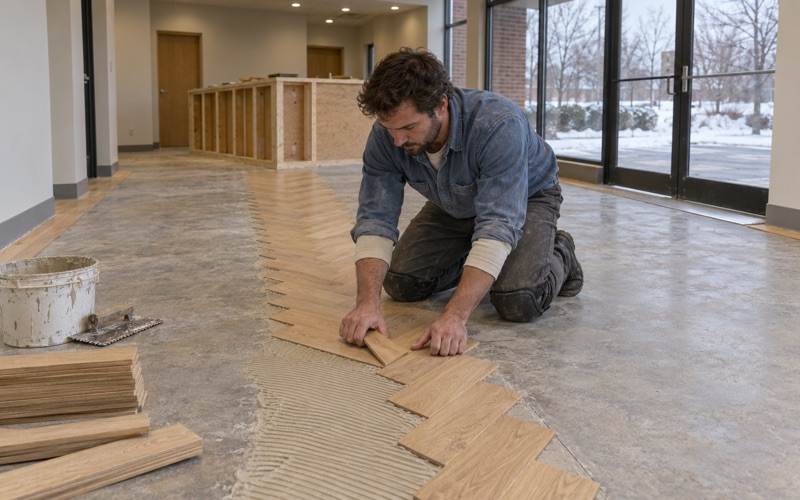
Minnetonka Wood Flooring handles wood-flooring in Vadnais Heights for rental owners who need a floor that passes the Fire Department’s yearly walk-through, and we bring more than 20 years of repair, refinishing and installation work to that job. A gouged board, a lifted seam or a torn transition strip is not just cosmetic in a rental here. It can stand between an owner and a current certificate.
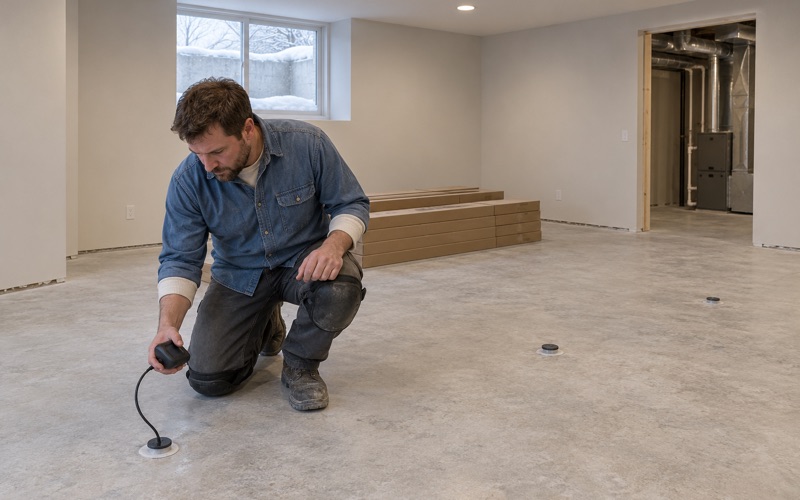
Our work for landlords starts with the floor itself rather than a sales pitch. We walk the unit, mark the damaged boards, read the indoor relative humidity with a hygrometer and write that number on the quote. Furnace season dries a Minnesota house well below the range wood is milled for, and a repair installed without that reading can open up again before the next visit.
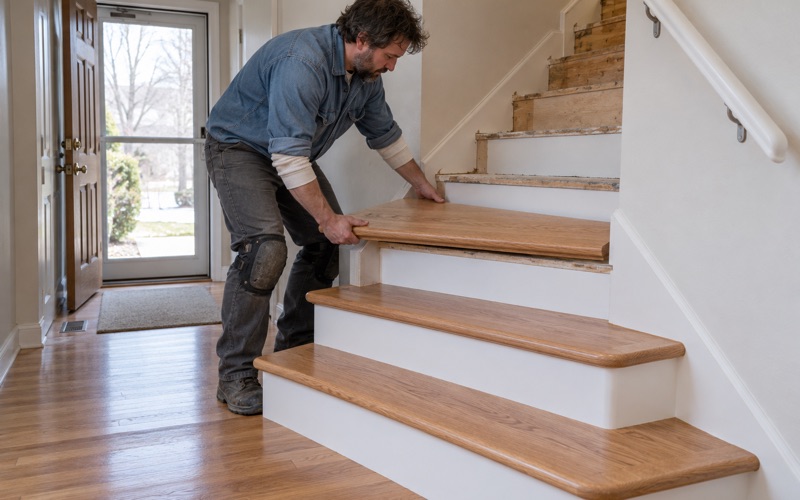
Owners get a written price per square foot before a crew is booked, with subfloor or structural fixes listed on a separate line. Stairs are priced per tread and riser. That way a landlord facing a correction notice can see exactly what the inspection-related repair costs and decide what else, if anything, is worth doing while the unit is empty.
The Floor Questions on the Vadnais Heights Rental Checklist
Chapter 8, Article IV and the 365-Day Certificate
In 2014 the Vadnais Heights City Council passed Article IV of Chapter 8 of the City Code, which requires rental dwellings to be inspected annually. The Fire Chief issues the resulting Rental Fire Certificate of Occupancy, and it is valid for one year, expiring 365 days from the initial inspection date. Floor condition is one of the items the inspector looks at on that visit.
Because the clock restarts each year, a floor that squeaked past last spring is looked at again twelve months later. A board that was slightly cupped then may have split since, and a threshold that was snug may now rock underfoot. We encourage owners to have us look at a worn floor a month or two before the certificate date rather than after a notice arrives.
Holes, Cracks, Tears and Trip Hazards
The city’s Rental Unit Inspection Check List puts it plainly under its Floors heading: “Are floors free of holes, cracks, tears, and trip hazards?” On wood, that question usually lands on a few familiar defects. Typical ones are split or splintered boards near an exterior door, pet-scratched areas worn through to bare wood, gaps that have widened into cracks, and a raised edge where boards have crowned or buckled.
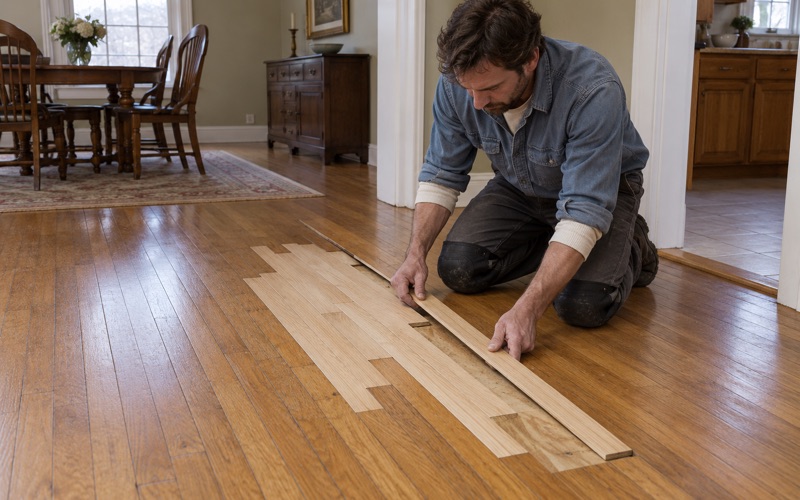
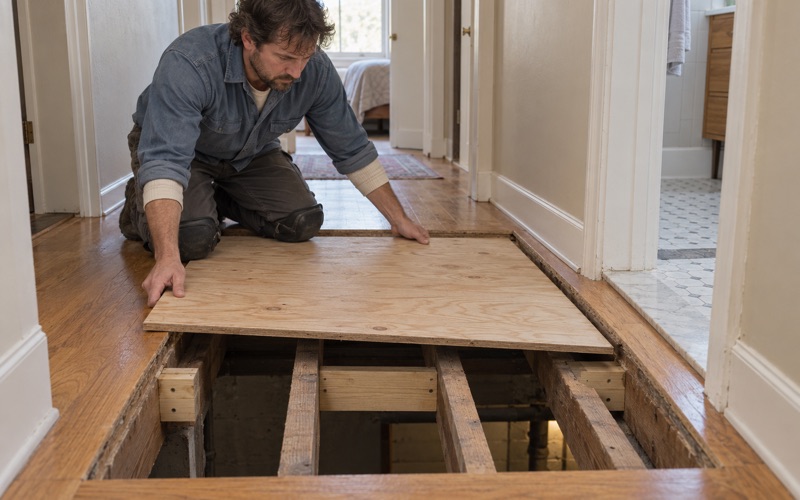
Our fix depends on what caused the defect. A single damaged board is cut out and replaced with matching species and width, and the new piece is laced into the field so the repair does not read as a patch. Raised or loose boards get a subfloor screw-down first, because face-nailing a board that is lifting from below only hides the trip hazard until the next season.
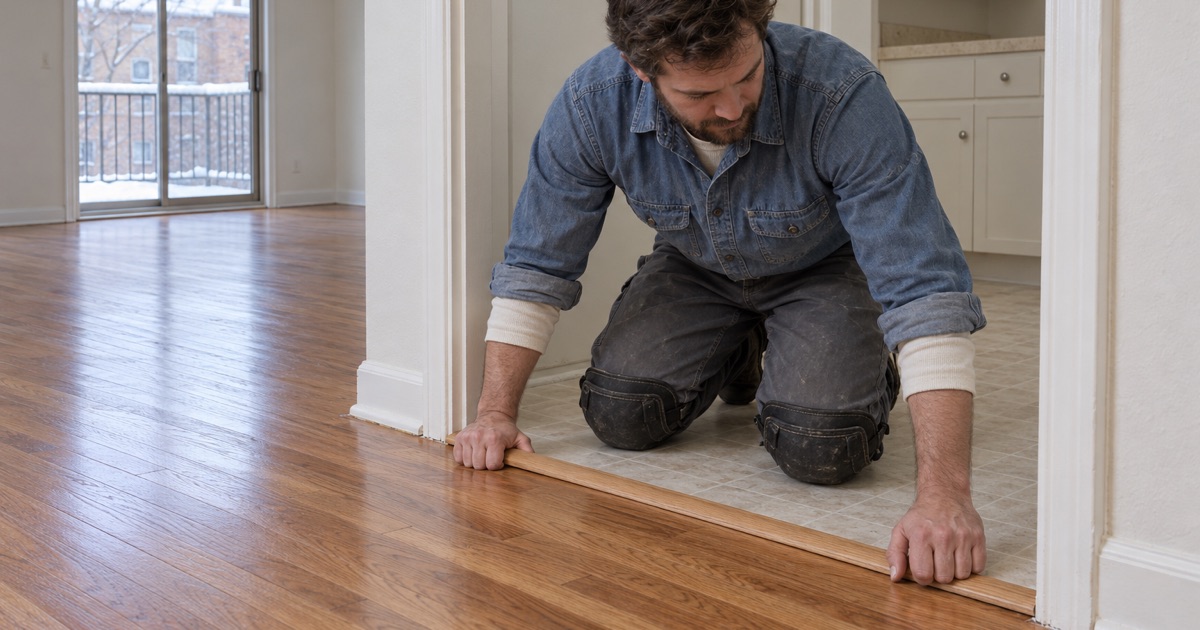
Transitions are the overlooked trip hazard. A loose T-molding, a cracked reducer or a threshold that has pulled away between a wood hallway and a tiled bath can catch a toe as easily as a broken board. We reset or replace those pieces in the same visit, so the whole path through the unit reads as flat and continuous.
A Guide, Not a Full List
The checklist describes itself as covering some of the most common violations found during the inspection and says it is meant as a guide only, not a full list. It does not tell owners which flooring material or finish to use. A carpeted bedroom and a refinished oak living room face the same question about holes and tears.
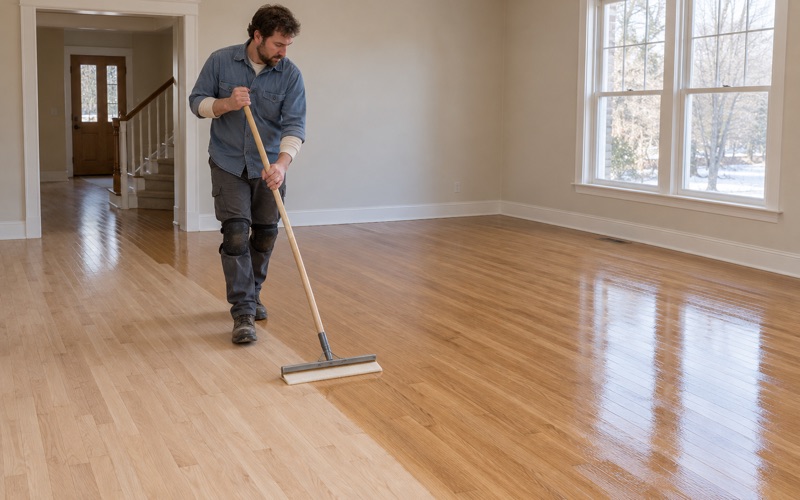
That leaves room for judgment. When a floor is past repairing board by board, we lay out the options in writing, including finish chemistry, cure time and the day furniture and tenants can return. Owners choose based on budget and turnover schedule, not on a rule the city never wrote. A waterborne polyurethane usually lets a unit turn over sooner than an oil-modified one.
Looking for wood-flooring closer to North St. Paul? See North St. Paul Wood-Flooring.
Watertight Kitchen and Bathroom Floors in a Rental
What the Second Floor Question Asks
Right beside the trip-hazard item, the same Floors section asks: “Do kitchens and bathroom have water tight surfaces?” Elsewhere the list asks whether tub and shower surfaces are watertight and whether the toilet is properly secured to the floor. Read together, those items point at places where water can get past the floor surface and into the structure below.
Wood Near the Sink, Dishwasher and Tub
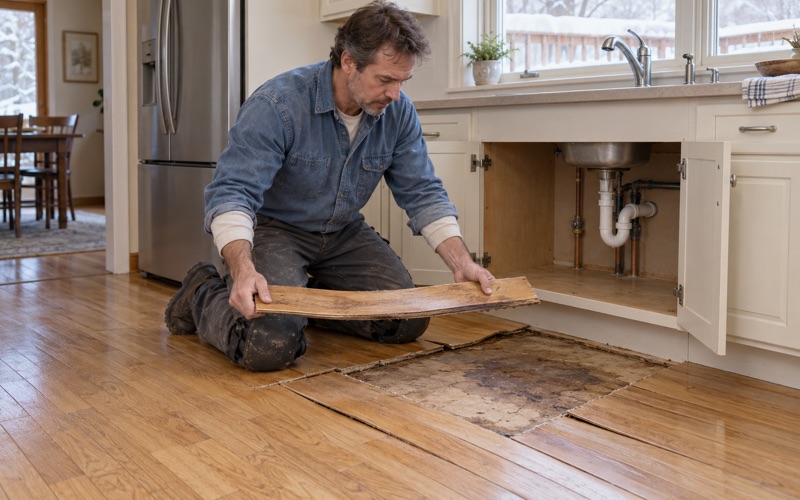
Wood runs into kitchens in plenty of rentals, and that is where we see the damage that turns into a watertight question. A slow dishwasher leak leaves cupped, gray-edged boards along the cabinet toe kick. A refrigerator ice-maker line can do the same thing in a corner nobody looks at between tenants. Open gaps and failed finish there let mop water straight into the seams.
Before we replace those boards, we take moisture readings on the subfloor itself with a pin moisture meter and record them. Laying new wood over a subfloor that is still wet traps the problem, and the fresh boards can cup soon after. Once readings are in range, we lace in new boards, then seal the repaired area so the surface sheds water instead of wicking it.
Bathrooms and Secured Toilets
Solid hardwood in a full bathroom is a harder case. When a toilet rocks, the wax seal often fails first and the wood around the flange darkens and softens. Once the toilet is pulled, we cut back to sound subfloor, price any soft spot as its own line, and set new boards so the fixture can be reset firmly to the floor.
Some owners decide a bathroom is better served by a different surface after a leak, and that choice is theirs. The checklist asks about watertight surfaces, not about species or finish. Where wood stays, we talk through edge sealing at the tub and the expansion gap at the walls so the floor can move without opening a path for water.
Thirty Days to Correct, and What Re-Inspection Costs
The Correction Window
When an inspector writes up a floor, the property owner has 30 days to correct the violations and schedule a re-inspection. The owner or a representative must accompany the inspector, so whoever walks the unit hears the finding firsthand. Calling us that week leaves room to order matching boards, let them acclimate and finish the work inside the window.
Acclimation is where rushed repairs go wrong. New boards brought in from a cold garage or a humid warehouse need time to reach equilibrium moisture content with the unit, and the reading we took on the first visit tells us what that target is. Skipping it saves a few days and often costs a gap or a crown by the next annual visit.
$100 Per Unit, Then $250
For rental buildings from one to four units, the city’s fee is $100 per unit, and that covers the initial inspection and one re-inspection. Each re-inspection after that costs $250. A floor repair that fails the first re-check because a board was set too tight or a threshold was left loose turns a small job into an added fee.
Buildings of five or more units work differently, with a $250 base fee per building plus $50 per unit inspected, with at least one third of units inspected and chosen by the Fire Chief or a designee. Owners there cannot predict which unit gets walked, so we suggest fixing worn hallways and kitchens across the building rather than one door at a time.
Keeping the Certificate Current
Letting the certificate lapse can bring a $200 penalty fee on top of everything else. Rental applications moved to the city’s online permitting system on March 6, 2025, but the floor itself still has to pass in person. We write cure time and return-to-service dates on the quote so a re-inspection is not booked onto wet finish.
Buying a Rental Here: The Certificate Stays Behind
Vadnais Heights is a Ramsey County city that residents voted to incorporate as a village in 1957, and the Minnesota State Legislature made it a city in 1974. Its rental inspection rules are far newer, and they treat a change of ownership in a specific way. The inspections run through the city’s Fire Chief, not Ramsey County.
Fifteen Days for a New Owner
The Rental Fire Certificate of Occupancy is not transferable. When a rental changes hands, the new owner must apply for a new certificate within 15 days of taking ownership. A passing result under the seller does not carry over, so a buyer effectively inherits the floor as it sits on the day of purchase.
Buyers of a rental can have us walk a unit before closing or right after. We note split boards, soft spots, loose transitions and any water staining near kitchens and baths, then price each item separately. On engineered flooring we measure the wear layer before promising a sand-and-refinish, since a thin veneer may only take a screen and recoat.
For buyers of older units, pre-1978 rentals are sanded under the federal EPA Renovation, Repair and Painting rule, since Minnesota is not an EPA-authorized state for that program. We describe containment by the equipment used, such as a HEPA vacuum and sealed doorways, rather than by a marketing word. That matters in a rental, where the next household moves in soon after the work is done.
Who Needs a Certificate and Who Does Not
Owner-occupied single-family houses, owner-occupied duplex portions and owner-occupied condominiums are exempt from the fire certificate. The requirement attaches to non-owner-occupied use. So the same house is outside the program while its owner lives there and inside it the day it is rented out, and a single-family rental needs a certificate like any other rental.
Occupancy limits come with it. A single-family rental may house at most 1 family, 4 unrelated adults or 3 boarders. More occupants means more foot traffic, and a hallway or kitchen in a full rental can wear through finish faster than the same room in an owner’s home, which is why we often suggest a harder-wearing finish for landlords.
Twin Homes and Townhome Rentals
Attached housing matters in this rental market. On the rental side, 212 units are single attached against 142 single detached, and 1,065 owner-occupied units are single attached. A twin home or townhome rental usually means a shared wall, sometimes an association, and a neighbor who will hear the drum sander.
Before scheduling an upstairs or shared-wall job, we read the association documents and match the underlayment to the building. Minnesota keeps IRC Appendix K, which sets sound transmission class 45 and impact insulation class 45 for townhouses and two-family dwellings, so replacing a floor over a shared assembly is not a place to guess. Under the Minnesota Common Interest Ownership Act, finished flooring inside a unit is generally the unit owner’s property.
- 20+ Years on Wood Floors
- Per-Square-Foot Written Quotes
- Stairs Priced Per Tread