Minnetonka Wood Flooring has handled wood flooring in St. Louis Park for more than twenty years, from screen and recoat visits on lightly worn oak to full sand and refinish jobs on floors that spent decades under wall-to-wall carpet. Before a crew is booked, you get a written price per square foot, with the recoat and the full sand laid out next to each other.
Many owners here ask a second question right after the price: can the city help pay for this? Sometimes it can. The city runs a zero-percent deferred loan that covers most permanent interior work, and a floor project can fit inside it once the house’s health, safety and code items are handled. We write our quotes so that sequence is easy to follow.
This page explains how that loan works, where floor and stair work sits in its priorities, who qualifies, and what restoring the narrow-strip oak common in this city actually involves. We describe the program as its terms are published; the final word on eligibility always belongs to the program administrator, not to us.
City Money for a St. Louis Park Floor: How the Deferred Loan Works
The St. Louis Park Deferred Loan is offered through the City of St. Louis Park Housing Division and administered in part by the Center for Energy and Environment. Its published terms are unusual for home improvement money, and they shape how we plan a floor project for an owner who intends to use it.
Amounts, Rate and Forgiveness
Loans run from $2,000 to $30,000 at 0 percent interest, listed as 0.156 percent APR. The loan is deferred for twenty years, and if the borrower still lives in the house at that point, it is 100 percent forgiven. For an owner who plans to stay put, that structure is about as favorable as home improvement money gets.
The catch is occupancy. If you sell, transfer the title, or stop living in the home as your primary residence before the twenty years are up, 100 percent of the loan comes due. For an owner who expects to move within a few years, it works as a zero-percent loan that is repaid in full at the sale.
What the Money Can and Cannot Cover
The program says most permanent interior and exterior improvements, maintenance and remodeling projects are eligible, including energy work and accessibility projects. Refinishing worn oak, replacing water-damaged boards, or rebuilding a failing stair can all be permanent interior work. Whether a particular scope qualifies is decided by the program, not promised by a contractor.
Some things are excluded outright: common-area improvements, any work started before the loan closes except in emergencies, recreation or luxury projects, and appliances that are not permanent. That second rule matters for floors. If we start sanding the week before your closing, that work is ineligible, so we schedule after the closing date rather than ahead of it.
Looking for wood-flooring closer to Edina? See Wood-Flooring in Edina.
Health, Safety and Code Items First: Where Floor Work Fits
The Deferred Loan requires that health and safety concerns and outstanding code violations be addressed first. A new floor is rarely the first item on that list. A broken stair, a soft spot in a bathroom subfloor or a loose handrail may well be, and a floor project often grows naturally out of fixing one of them.
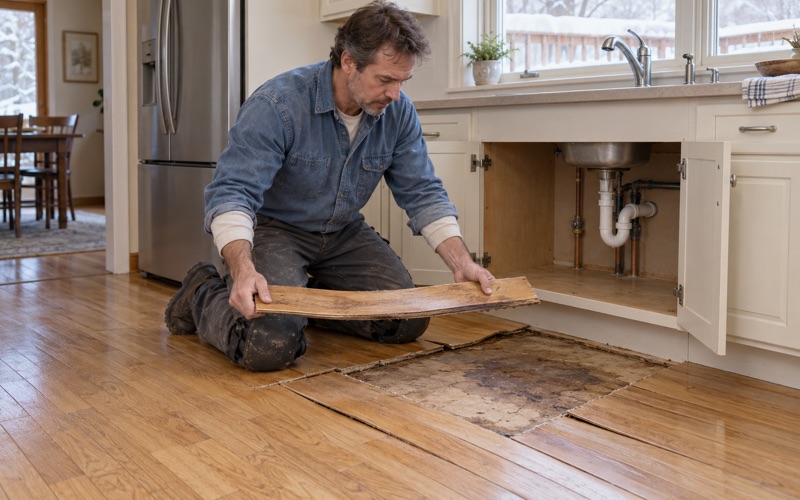
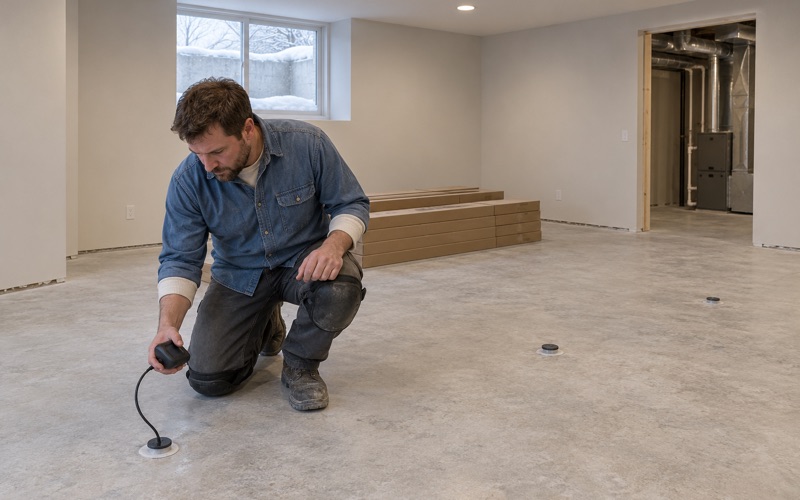
Moisture is part of that conversation too. Before a board goes down over a repaired subfloor, we take readings on the subfloor itself with a pin moisture meter and record them on the job paperwork. A subfloor that spent a spring wet from a sump pump backup can look sound and still be holding water that would cup new flooring within a season.
Stairs, Soft Spots and Structural Lines
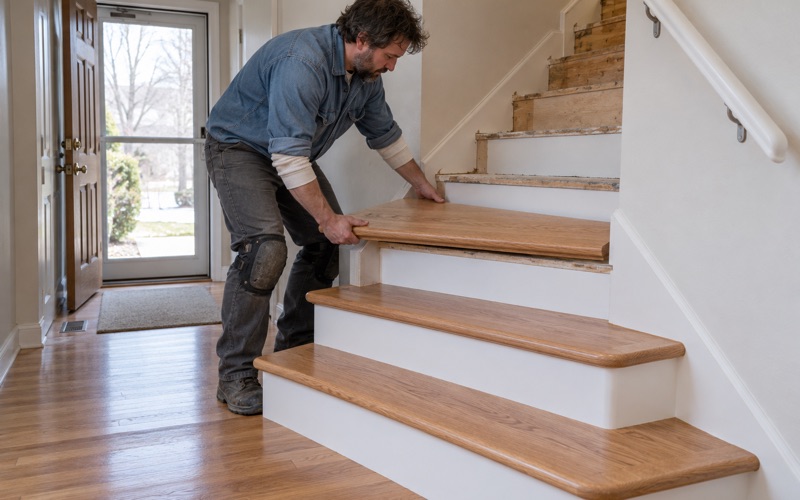
When we walk a house, we separate safety and structural problems from appearance work. Loose stair treads, a cracked nosing, a riser pulling away from its stringer, or a joist sagging under a kitchen all go on the quote as their own lines. Stairs are priced per tread and riser, never folded into a square-foot figure.
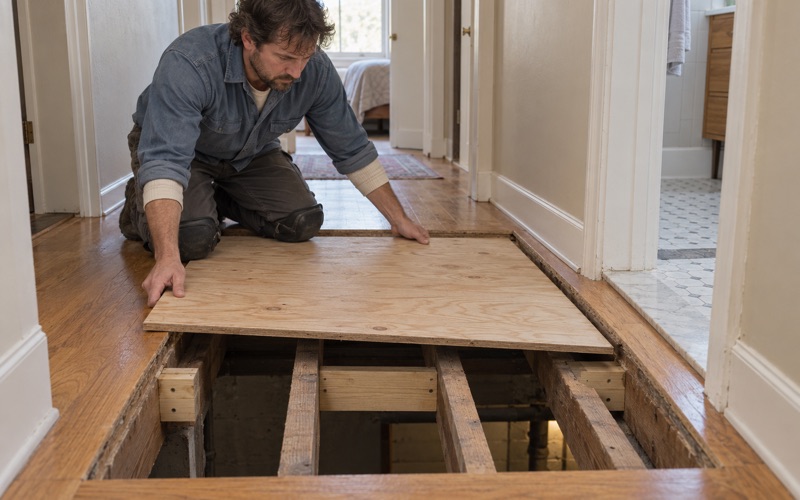
Subfloor and structural repairs, such as a subfloor screw-down to stop squeaks or replacing rotted plywood near a toilet flange, are likewise priced separately from the finish work. That split lets the program, and you, see which dollars address a safety condition and which go to sanding and finish. It also keeps a refinish quote honest about what it does not include.
Lead, Permits and the Finish Line
Many St. Louis Park houses predate 1978, and sanding a floor in pre-1978 housing can disturb old paint on baseboards, shoe molding and thresholds. Minnesota is not an EPA-authorized state, so EPA administers the federal Renovation, Repair and Painting rule here directly. We describe our containment by equipment, meaning plastic sheeting, sealed doorways and HEPA vacuum cleanup, rather than calling it dustless.
Minnesota Rules 1300.0120 exempts painting, tiling, carpeting and similar finish work from the building permit requirement. The exemption does not authorize work that violates the code, though, and structural repair is not finish work. When a stair rebuild or joist repair is part of the scope, we flag it on the quote so permit questions are settled before the loan closes.
Who Qualifies, and the Audit and Bid That Come Before Work
Eligibility for the Deferred Loan is narrow. The published limits are specific enough that most owners can check them before calling anyone, and it saves everyone time to do that first. Here is how the rules read, along with the two steps the program requires before any money moves and how we time a floor job around them.
Property Type, Value and Income
The property must be a one- or two-unit home within the City of St. Louis Park, occupied by its owner, and valued at no more than $445,000. Household income cannot exceed 80 percent of the area median income. Properties used for commercial purposes, manufactured homes, cooperatives, buildings with more than two units, and absentee-owned homes are not eligible.
That last exclusion is worth stating plainly: a rental house the owner does not live in cannot use this loan. The city’s other Center for Energy and Environment programs include two down payment assistance loans and a Multifamily Rental Rehabilitation Deferred Loan. Move Up in the Park is separate again; it funds additions that significantly increase square footage, not finish work like flooring.
The Home Energy Squad Audit and One Bid
The program requires a Home Energy Squad home energy audit. The Center for Energy and Environment lists Energy Saver visits at $35 and Energy Planner visits at $50, free for income-qualified households. The audit can reorder a project, since air sealing or insulation work may need to come before the floors.
The program also asks for one bid from a properly licensed contractor. Confirm the credentials it requires directly with the Center for Energy and Environment before relying on any bid, ours included. What we provide is a quote detailed enough to review: square footage, stair counts, subfloor lines, finish chemistry, cure time, and the day furniture, rugs and pets can come back.
Timing the Project
Because work begun before closing is excluded, the order runs audit, bid, application, closing, then work. We can measure, take moisture readings and write the quote early, and then hold a start date open until the loan has closed. Sanding and finish are booked only after you confirm the closing has happened.
Season matters as well. We read indoor relative humidity on our first visit and write it on the quote, because wood flooring is made for roughly thirty to fifty percent relative humidity and a Minnesota house in furnace season often sits below that band. Some seasonal gapping in winter is normal, and new boards installed in dry months are acclimated with that in mind.
Restoring Narrow-Strip Oak in a 1950s St. Louis Park Rambler
Roughly 65.8 percent of St. Louis Park’s housing units were built before 1980, and the 1950s is the largest single decade at 23.6 percent. Houses from that postwar decade commonly have narrow-strip oak hiding under carpet, whether the address is in Brookside, Browndale, Elmwood or another of the city’s 36 official neighborhoods.
What Comes Up From Under the Carpet
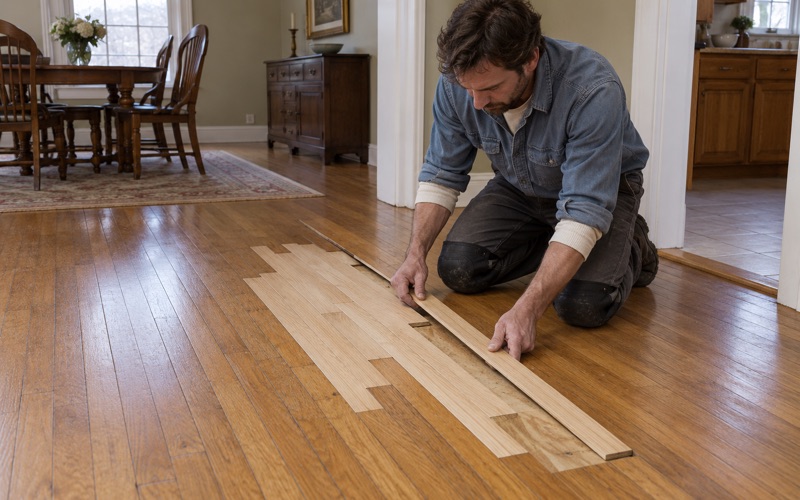
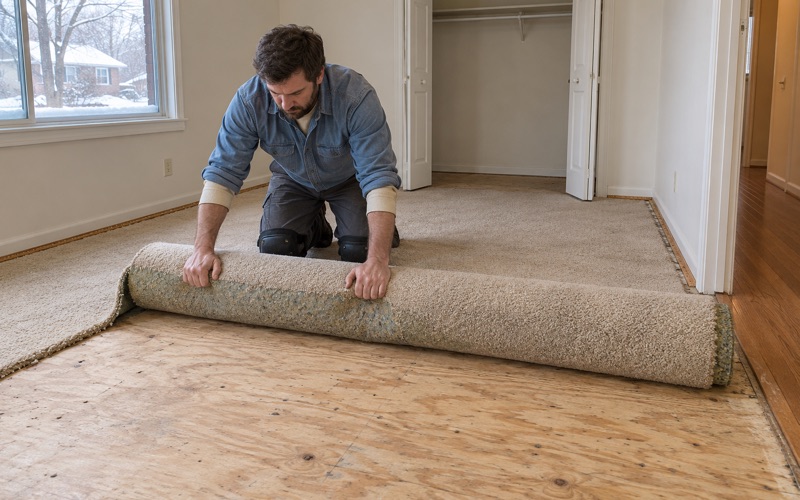
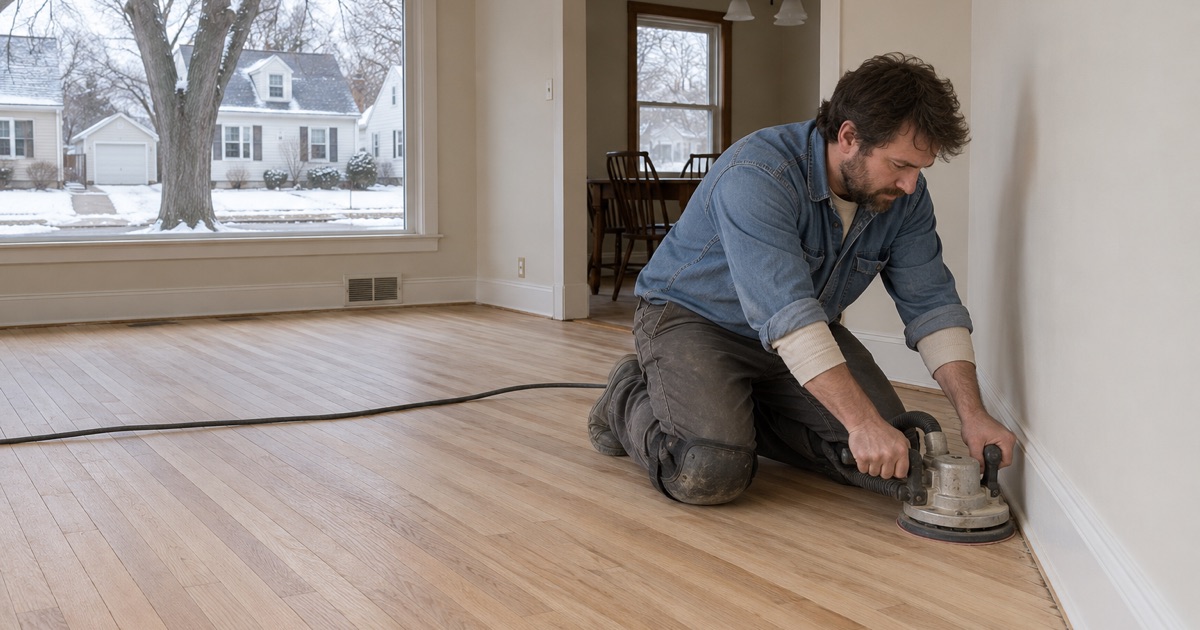
Pulling carpet usually reveals staple holes, tack strip nail lines along the walls, pad residue and the occasional pet stain that has gone black in the grain. Most of that sands out. Deep stains and boards split by tack strip are handled with board replacement, weaving matching red oak into the existing courses so the repair disappears once finished.
Narrow strips from that era are typically solid hardwood, nailed through the tongue, with enough material above the tongue for a full sand. Where a previous owner installed engineered flooring in a kitchen or addition, we measure the wear layer before promising a sand and refinish, because a thin veneer may only be able to take a screen and recoat.
Sanding Sequence and Finish Choices
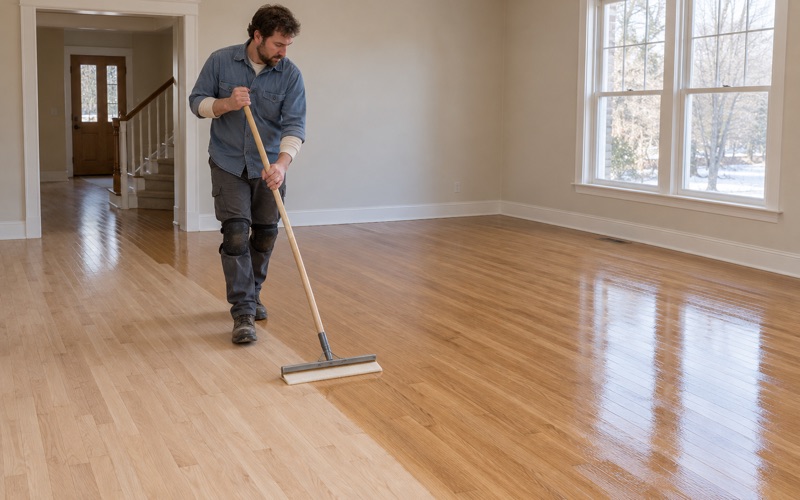
A full sand on old red oak typically moves through a 36-50-80 grit sequence with a drum sander and edger, then an abrasive screen on a buffer to remove scratch patterns before stain or sealer. Red oak takes stain fairly evenly, and water popping before a dark color helps the grain read deeper and more uniform.
For finish, we explain waterborne polyurethane, oil-modified polyurethane and hardwax oil in terms of dry time, cure time, sheen and how each wears in a busy hallway. Waterborne finishes cure faster and stay clearer on oak; oil-modified finishes amber over time. Whichever you choose, the cure schedule and the return date for furniture are written on the quote before we start.
- 20+ Years on Wood Floors
- Per-Square-Foot Written Quotes
- Stairs Priced Per Tread