Minnetonka Wood Flooring handles wood flooring in New Hope for owners who live in their homes and for landlords who rent theirs out, and after 20+ years in the trade we plan rental jobs around the city’s calendar as much as the wood’s. A floor in a rented unit has to be finished, cured and back in service before a certificate date or an inspection, not whenever a crew frees up.
Each quote starts with a written price per square foot, and we put the recoat and the full sand side by side so you can weigh the cheaper option against the deeper one. On engineered boards we measure the wear layer before promising a sand-and-refinish at all, because a thin veneer that gets sanded through cannot be fixed with more finish.
For a landlord, the written schedule matters as much as the price. Before work starts you get the finish chemistry, the cure time, and the day furniture, rugs and pets can come back, all on paper. That date is what you hand a tenant, a cleaner or the next guest, and it is the date we hold ourselves to.
Renting Out a New Hope Property, Short-Term Stays Included
A Certificate Comes Before the First Guest
The City of New Hope requires a rental certificate for short-term rentals such as Airbnb, the same way it registers longer leases. The city does not ban short-term stays; it certifies them. If you are refinishing a house or unit to list it, the certificate and the floor work belong on one timeline, because a listing date set before the floor is cured is a promise you cannot keep.
We work backward from your first booking. A waterborne polyurethane takes light foot traffic well before it reaches full cure, and rugs and heavy furniture wait for the cure, not the dry time. We write both dates on the quote so the calendar you build for the listing matches what the floor can actually bear.
Four Unrelated Renters and the Wear That Comes With Them
New Hope City Code allows no more than four unrelated renters, and that cap shapes how hard a rental floor works. Up to four adults on separate schedules mean four sets of shoes, chairs dragged at different hours and more trips through the kitchen and entry than a single household usually makes.
For a unit shared by several unrelated renters, we steer owners toward a harder species and a finish built for traffic. White oak and hickory carry higher Janka hardness than red oak, and a commercial-grade waterborne finish shrugs off chair legs better than a soft oil. Felt pads and a mat at the door still do more than any species choice.
A City Where Nearly Half the Households Rent
Renters occupy 47.4 percent of New Hope’s occupied housing units, and most of those households live in buildings of five or more units rather than in houses. A large share of the city’s rental flooring therefore sits over someone else’s ceiling, so on an upper-floor unit we choose the acoustic underlayment with the neighbors below in mind.
Condo and townhome units add another layer. We read the association documents before quoting, because some associations set rules for hard flooring and sound transmission, and those rules are far easier to meet before the boards are bought than after. That reading happens before the crew is booked, not once the material is on site.
Looking for wood-flooring closer to Crystal? See Wood-Flooring in Crystal.
The Two-Year Inspection Cycle and the 15-Day Correction Window
Certificate Years and Inspection Intervals
New Hope’s Rental Registration Permit Program requires residential rental property to register with the city each year. One- and two-unit rentals hold a one-year certificate valid July 1 through the end of June, and they are inspected once every two years. Properties with three or more units run on a calendar-year certificate and are inspected approximately every three years.
For a small landlord, that means an inspection year arrives on a predictable rhythm. We suggest booking a recoat or repair in the months before it, while the unit is between tenants if possible, rather than in the weeks right after. Floor work done ahead of the visit never has to compete with whatever else the correction list asks for.
Fifteen Days Is Not Long for a Floor
Required corrections are due within 15 days of the initial inspection, whether the property has one unit or fifty. We do not know what a given inspector will write, and the city’s own checklist is the place to look for that. What we do know is how long floor work takes, and on an occupied unit a full sand and refinish can use up much of that window once scheduling, coats and cure time are counted.
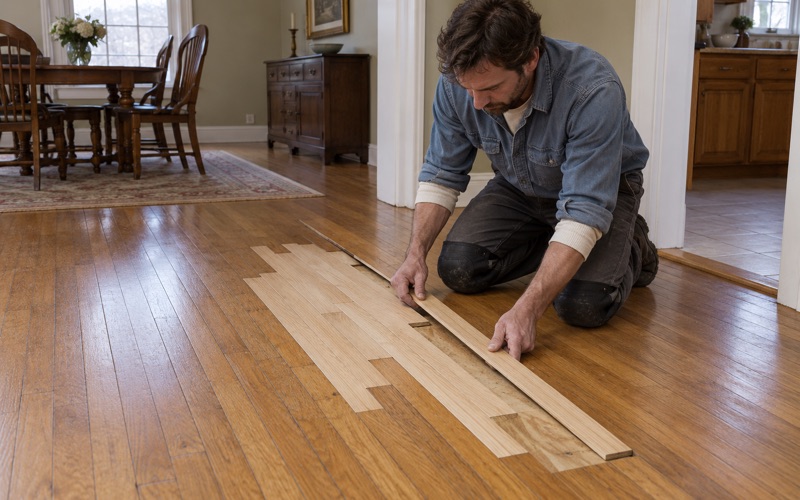
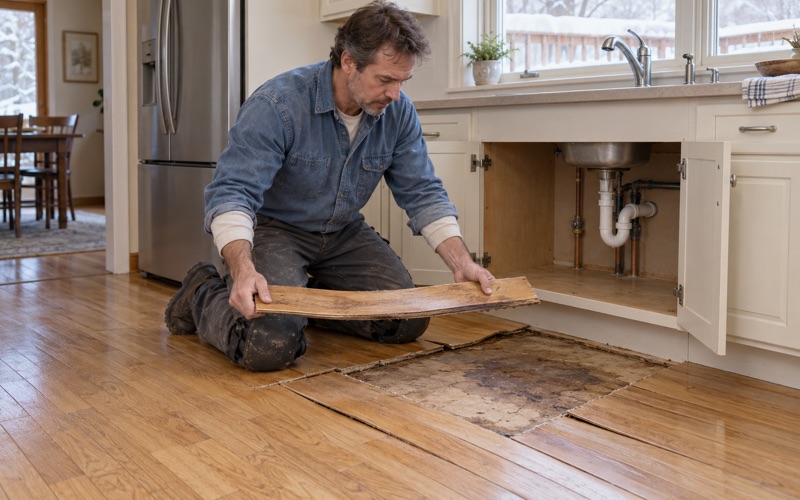
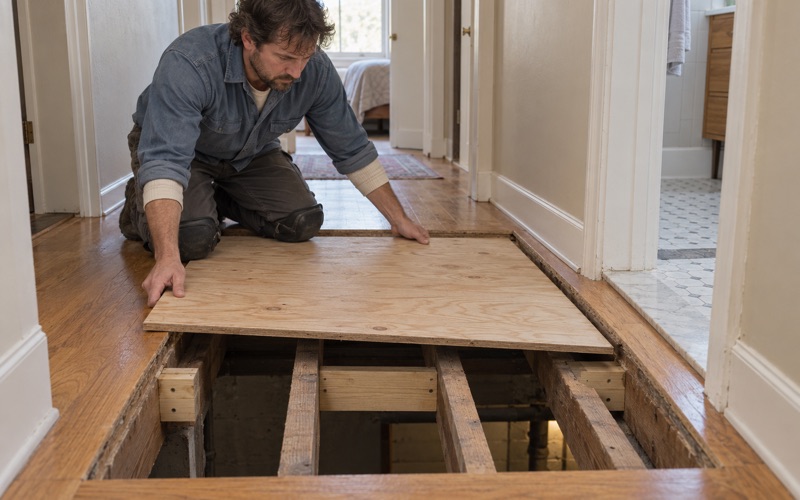
If a damaged floor is on your own list of things to settle before the visit, call us early. On the first walk-through we can usually tell whether the area needs board replacement with a weave-in, a screen and recoat, or something deeper, and we price subfloor or structural repair as its own line, separate from the finish work.
Lead Rules in 1960s and 1970s Units
New Hope’s housing is overwhelmingly from the decades before 1980: 3,734 units, 40.5 percent of the stock, were built between 1960 and 1969, and 76.9 percent predate 1980. When we sand a floor in a house or building built before 1978, we work under the EPA Renovation, Repair and Painting rule, which matters doubly in a rental with tenants coming and going.
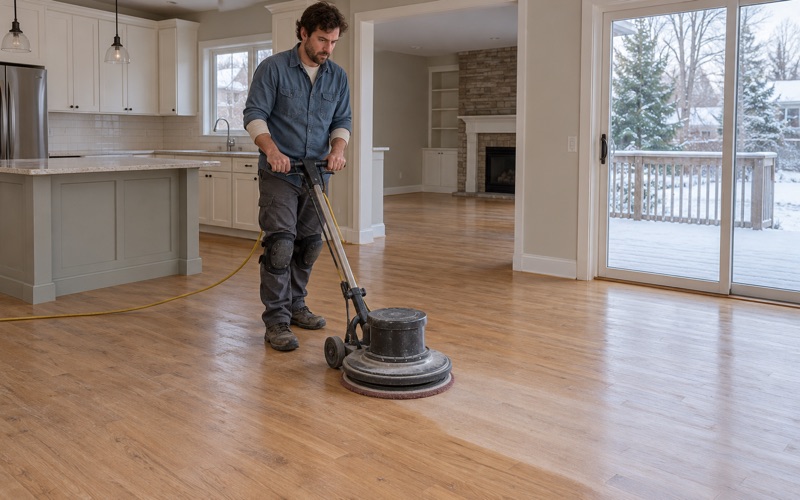
We describe our dust containment by its equipment rather than with the word dustless: sealed doorways, sanders connected to dust extraction, and HEPA vacuum cleanup before the room is released. For a landlord, that means the unit can be handed back to a tenant or guest without a film of sanding dust on the windowsills.
Floors That Hold Up Between Tenants and Guests
Furnace Season in a Leased Unit
Minnesota Statutes 504B.161 makes it a non-waivable part of a residential lease that the premises be kept at 68 degrees Fahrenheit or warmer from October 1 through April 30. That is a seven-month heated season, and furnace air pulls indoor relative humidity below the thirty to fifty percent range wood flooring is made for.
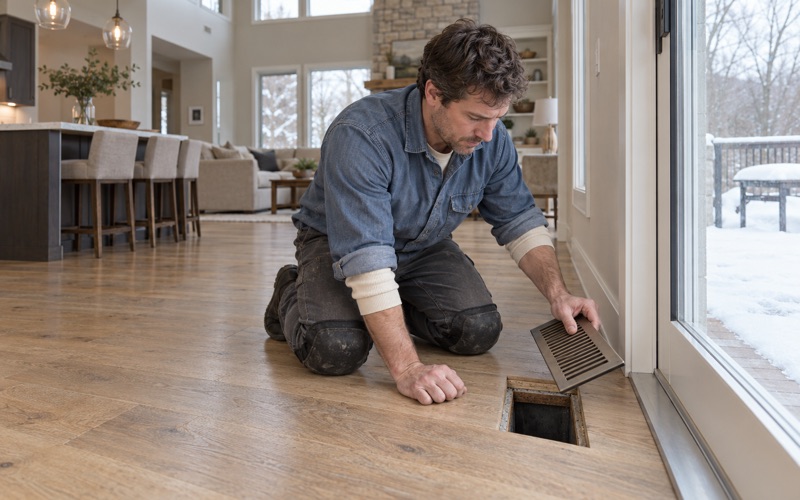
The result is seasonal gapping between boards each winter, and in a rental a tenant may report it as damage. We read the indoor relative humidity with a hygrometer on the first visit and write it on the quote, so you have a baseline. A whole-house humidifier on the furnace is often the fix, and it protects the floor from compression set over repeated seasons.
Recoat Between Tenants, Sand When It Is Earned
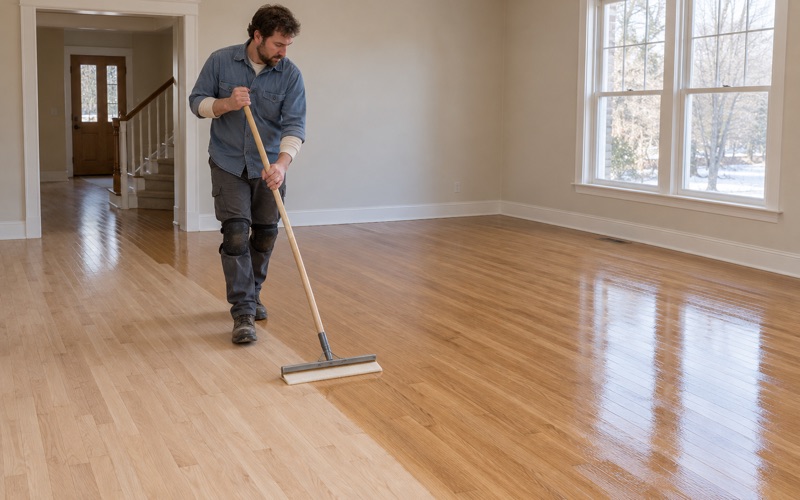
Turnover is the natural moment for floor work, and most rental floors do not need a full sand each time. A screen and recoat abrades the existing finish with an abrasive screen on a buffer and lays down a fresh coat, which restores wear protection in far less time than taking the boards to bare wood.
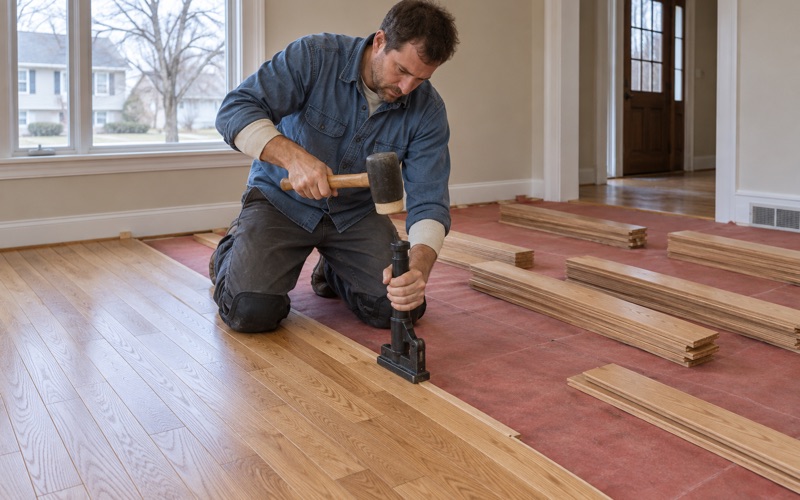
When the finish is worn through to gray wood, or pet stains have soaked in, a full sand and refinish is the honest answer. We run the 36-50-80 grit sequence with a drum sander and edger, then check for chatter marks and swirl marks before the first coat. Both options appear on your quote with separate prices.
Lower Levels and Stairs in Rented Space
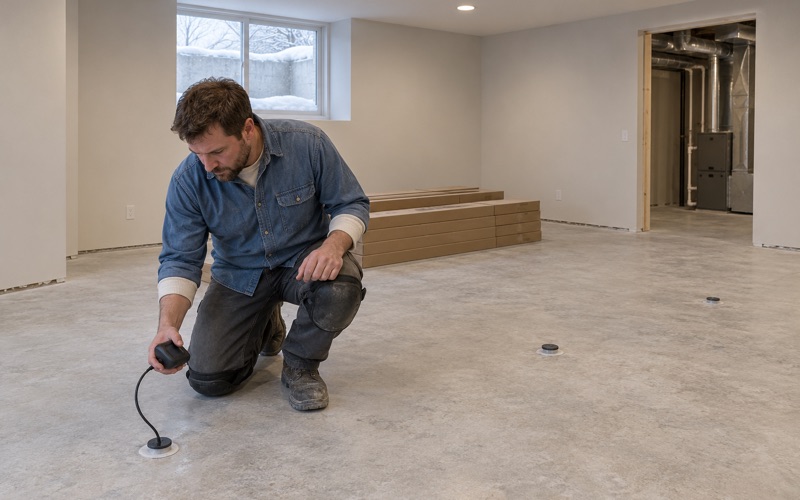
A lower level rented as living space gets graded by the three-inch soil rule in the NWFA installation guidelines: if surrounding soil sits three inches or more above that floor, the level counts as below grade, walkout lower levels included. Solid hardwood does not belong there, so we quote engineered or floating floors and take moisture readings on the slab before a board goes down.
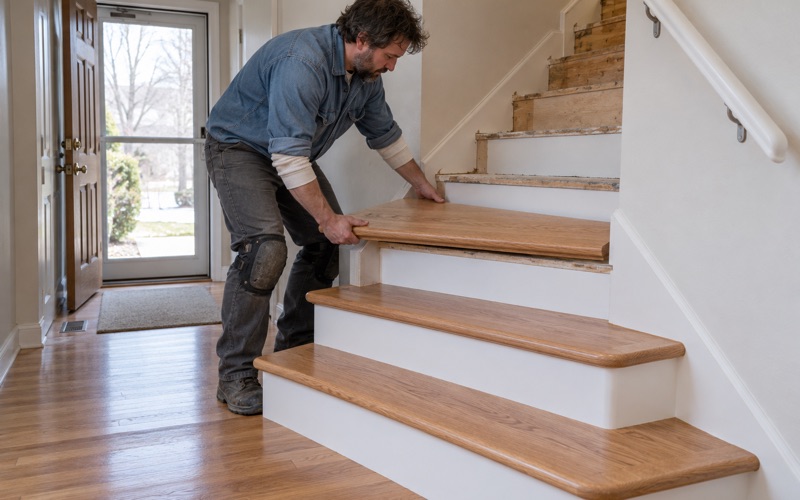
Stairs take a beating with several renters sharing them. We quote them per tread and riser rather than folding them into the square-foot price, so a landlord can see what the stairs cost on their own and decide whether to refinish them now or at the next turnover.
Landlord Rebates and Paying for the Work
Up to $500 Back for Small Landlords
New Hope offers small-property owners a $250 rebate for completing the Fundamentals of Rental Property Management in Minnesota course, plus a further $250 rebate if no disorderly conduct reports occur within 18 months. Multifamily owners who meet the city’s Best Practices standards pay a lower annual rental registration fee.
Neither rebate is tied to flooring, but both reward an owner who runs a rental deliberately, and the floors are part of that. A floor with fresh, even finish is easier to document at move-in and again at move-out, which keeps a security deposit discussion under Minnesota Statutes 504B.178 grounded in photos rather than memory.
The City’s Home Improvement Loan
The New Hope Home Improvement Loan runs from $2,000 to $15,000 with terms of up to 10 years and no maximum income limit, though the interest rate is set by household size and income. It is open to one- to four-unit residential properties, owner-occupied and absentee-owned alike, townhomes and condos included, and eligible improvements include interior maintenance or remodeling.
For a landlord who lives elsewhere, that absentee-owner eligibility is the useful part. The loan is secured by a mortgage on the property, closing costs apply, properties held in a trust are not eligible, and the work must be completed within 120 days of closing. Our written quote, with each line priced separately, gives you the figures to bring to that application.
Planning Around the Certificate Year
New Hope became a village in 1953 and reached city status by 1974, and its population grew from 3,552 in 1960 to 23,180 in 1970. Solid hardwood from that building era often has sanding life left in it, so a worn rental floor is frequently a refinishing job rather than a replacement.
Tell us your certificate dates, your next inspection year and any booking or lease start you are working toward. We will measure, take moisture readings, read the humidity, and come back with a written plan that fits the city’s calendar and your own, so the floor is ready before the date that matters.
- 20+ Years on Wood Floors
- Per-Square-Foot Written Quotes
- Stairs Priced Per Tread