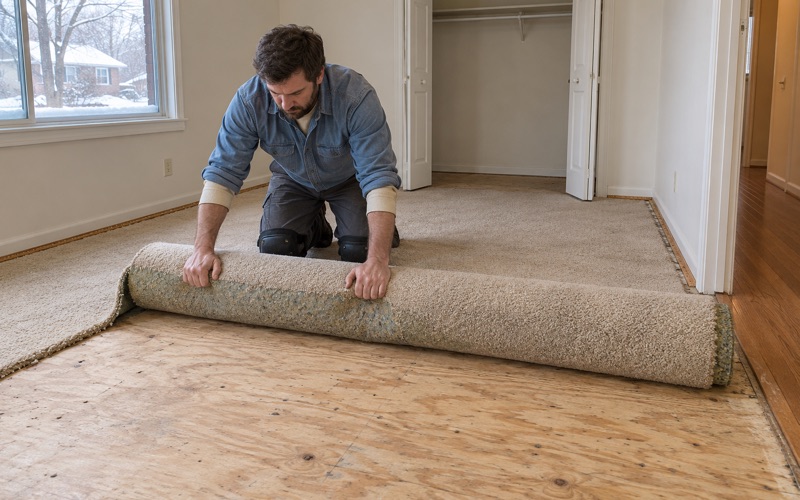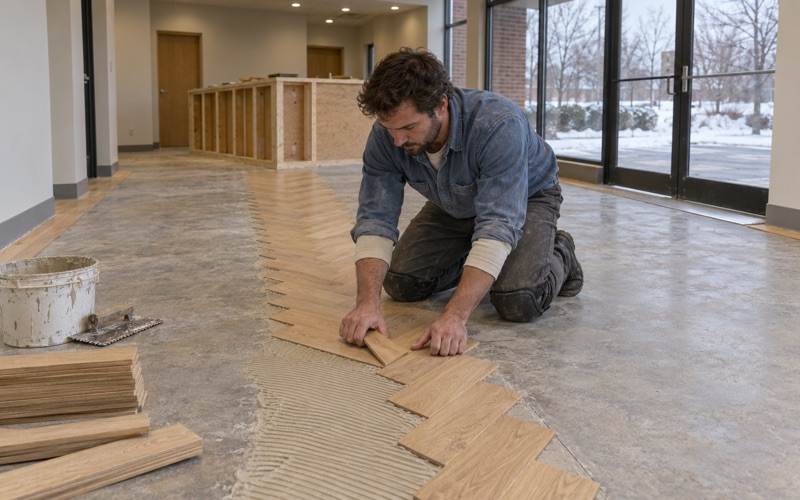
Minnetonka Wood Flooring has handled wood-flooring in Mendota Heights for more than 20 years, and many of the floors we see there belong to people who intend to keep living on them. That shapes the job from the first visit. A refinish meant to carry a household through the next fifteen years is planned differently from one meant to photograph well for a listing.
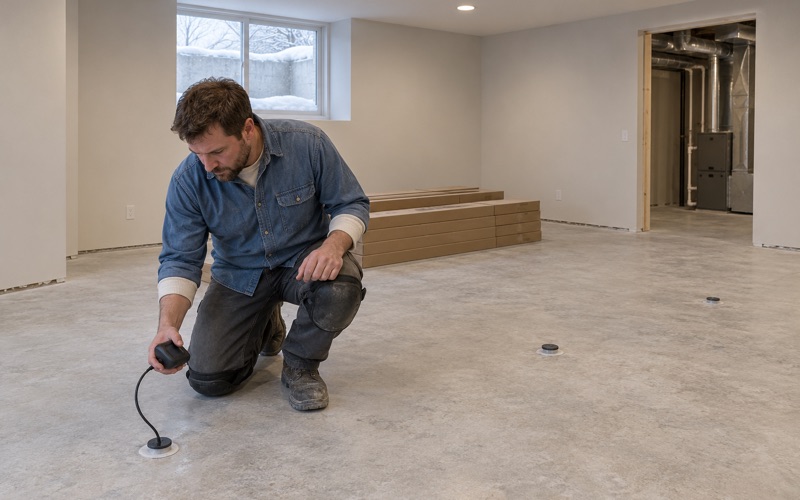
Before any crew is booked, you get a written price per square foot with the screen-and-recoat option and the full sand priced next to each other. We also read the indoor relative humidity on that first visit and put the number on the quote, since a heated Minnesota house in winter usually runs drier than the range wood flooring is built for.
Engineered floors get their wear layer measured before anyone promises a sand-and-refinish, and the finish chemistry, cure time and the day furniture, rugs and pets can return are written down before work starts. For a household planning around a long stay, a sale, or an aging parent’s routine, those dates matter as much as the price.
Who Owns the Houses in Mendota Heights
Owner Age in the Census
The American Community Survey’s 2024 five-year estimates count 3,767 owner-occupied households in Mendota Heights. In 1,622 of them, or 43.1 percent of owners, the householder is 65 or older. Widen the line to 55 and the figure reaches 2,540 households, 67.4 percent of owners. Those numbers describe a city where a large share of floors belong to people at or near retirement age.
The age bands above 65 break down further. The same table shows 924 owner households headed by someone aged 65 to 74, 593 aged 75 to 84 and 105 aged 85 or older. On the renter side, 297 of 1,018 households have a householder 65 or older. For us that changes how a visit is planned, not just who answers the door.
Detached Houses and Attached Units
Owners hold 78.7 percent of the city’s 4,785 occupied housing units. Of those owner households, 2,970 live in single-family detached houses and 465 in single-family attached units such as townhomes. That split matters for floor work. A detached house usually leaves the decision with the owner, while an attached unit can bring association rules about underlayment, hours and where the equipment parks.
When a townhome job comes up, we read the association documents first and match any underlayment to the building before the work goes on the calendar. The housing stock also runs through several decades. The 1980s were the peak building decade, and 44.1 percent of units were built before 1980, so a single week can include original site-finished oak and much newer prefinished boards.
The city grew out of Mendota Township, organized in 1858, which spent about ninety years as truck farm and dairy country before incorporating as the Village of Mendota Heights in 1956. Population went from 2,107 in 1950 to 5,028 by 1960, and 627 of the city’s housing units date from the 1950s.
Life-Cycle Housing in the City Plan
The City of Mendota Heights put this pattern into policy. Its 2040 Comprehensive Plan encourages life-cycle housing of various forms and tenures that allows residents to remain in the community throughout their lives, and it names senior ownership units, senior rental units, memory care and assisted living among them. The plan also calls for periodic assessment of housing needs for the elderly and active retirees.
A floor is a small part of that picture, but it is one of the surfaces a person crosses many times a day. Staying in a house longer often means asking more of it: a finish that holds up to a walker or a cane, boards that sit flat, thresholds that do not catch a toe. Those are practical floor questions, and they come before color.
Looking for wood-flooring closer to Mounds View? See Wood-Flooring Services in Mounds View.
Refinishing a Floor You Plan to Keep
Screen and Recoat or Full Sand
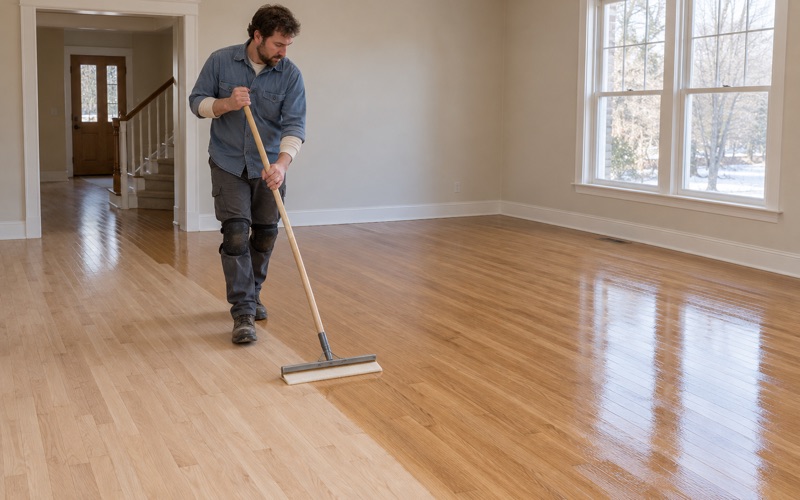
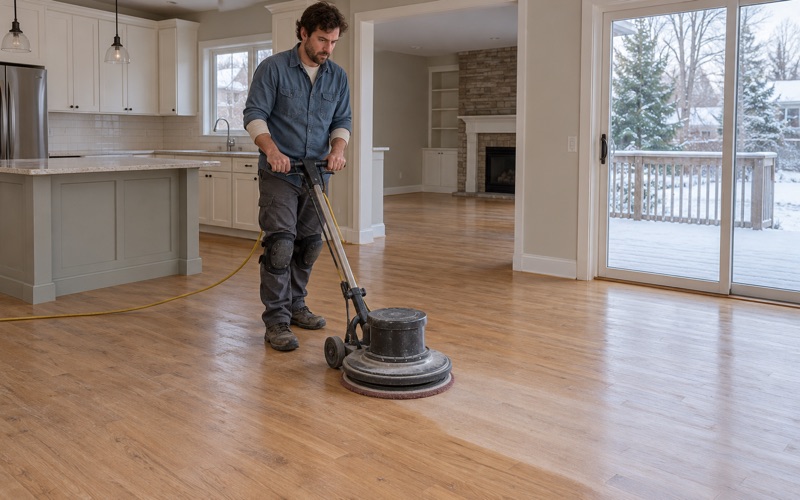
If the finish is worn but the wood beneath it is intact, a screen and recoat can restore it in a day or two of work. We abrade the existing coat with a buffer and abrasive screen, clean it with a HEPA vacuum and apply fresh polyurethane. No bare wood is exposed, so there is less dust and a shorter disruption to the house.
A full sand and refinish is the answer when there are gray boards, deep scratches or old pet stains. That means a drum sander and edger through a 36-50-80 grit sequence, then an orbital pass to remove swirl marks and chatter marks. Both options appear on the same written quote, so you can weigh what the floor needs against how long you plan to stay.
Engineered Floors and the Wear Layer
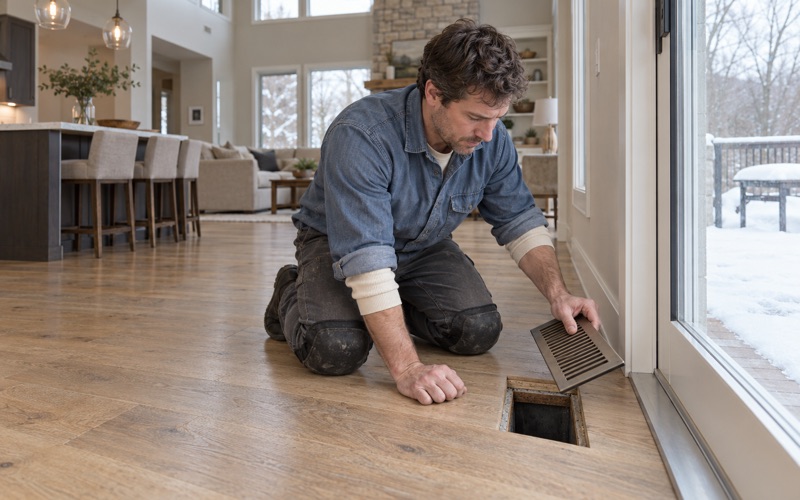
Some houses here have engineered flooring, and those floors can only be sanded as many times as the wear layer allows. We measure that layer, usually at a vent opening or a threshold, before saying a full sand is possible. A thin wear layer risks sand-through, which exposes the engineered core and cannot be fixed by refinishing.
When the layer is too thin, a screen and recoat is still often possible, and we will say so plainly. For an owner planning a long stay, the honest answer may be to recoat now and replace later, rather than spend the last sanding the floor has on a single refresh.
Dry Winter Air and a Floor That Lasts
Wood flooring performs best between 30 and 50 percent relative humidity at 60 to 80 degrees Fahrenheit. Minneapolis-St. Paul January normals put the monthly mean at 16 degrees, and a house heated against that through furnace season often drops well below the band. Seasonal gapping between boards is the usual result, and cupping or crowning can follow when the air swings back in summer.
That is why the humidity reading from our first visit goes on the quote. If the house sits at 20 percent in January, a whole-house humidifier or a room unit may do more for a long-lived floor than any finish. We would rather point that out before refinishing than after the boards open up again.
Getting a House Ready for the Next Owner
What a Buyer Sees on the Floor
When a long ownership ends, whether through a move to senior housing or a sale after a parent’s passing, the floors are often one of the most visible items in a listing. A refinished oak floor reads as cared for in photographs and at showings. Worn traffic lanes, dark pet stains and gaps at the walls read as deferred maintenance.
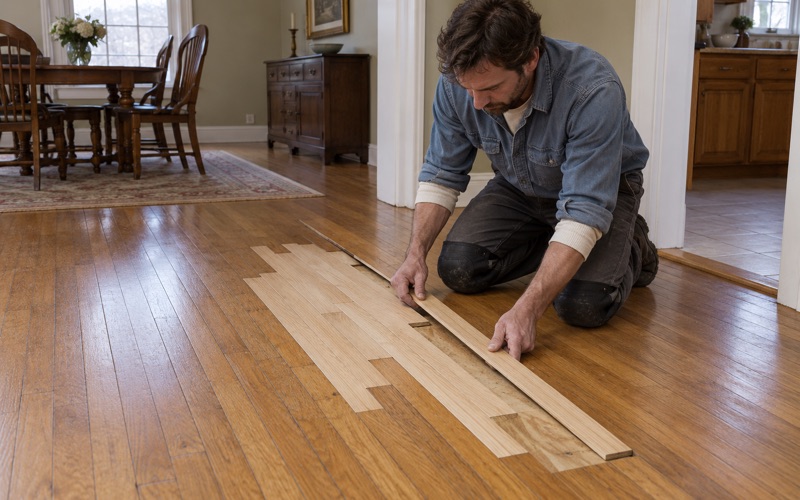
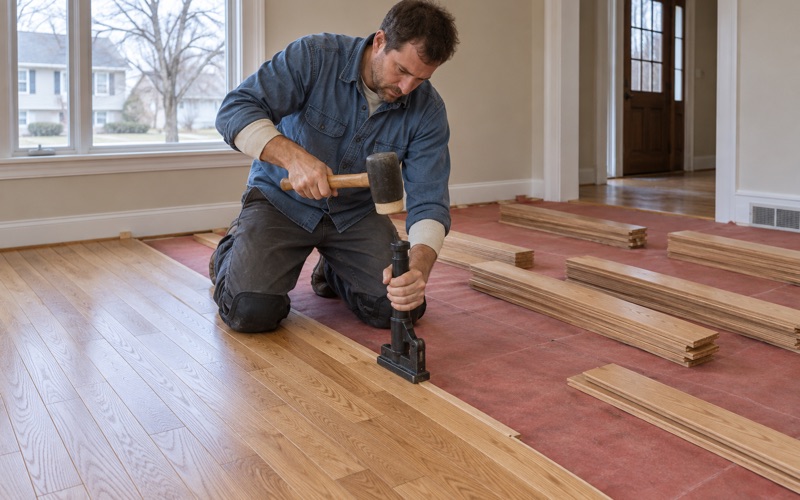
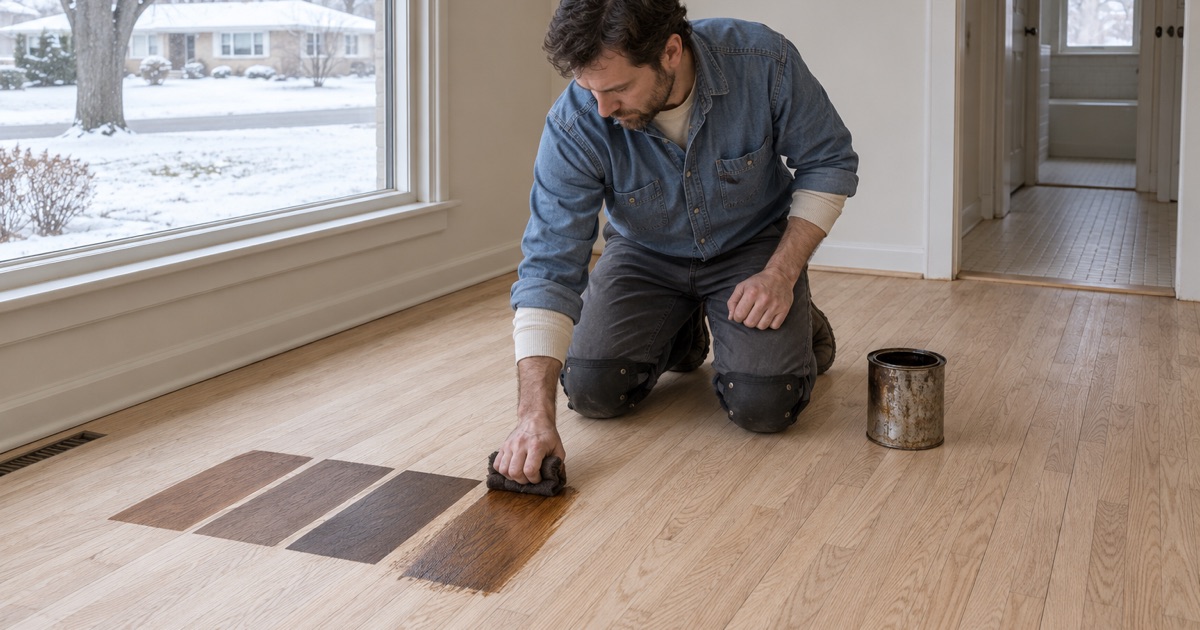
Pre-sale work is usually about speed and a neutral result. We often recommend a natural or lightly tinted finish in a satin sheen, since buyers tend to bring their own taste, and a waterborne polyurethane that dries fast enough to keep a listing date. Board replacement and weave-in repairs for damaged spots are priced separately, so you can decide which ones are worth doing.
No Time-of-Sale Evaluation Here
A number of Minnesota cities require a truth-in-housing evaluation before a house is sold. Mendota Heights does not appear on the statewide list of cities with that requirement, and the city’s own code and community development pages name no pre-sale inspection. Floor work before a sale here is driven by buyers and the market, not by a city checklist.
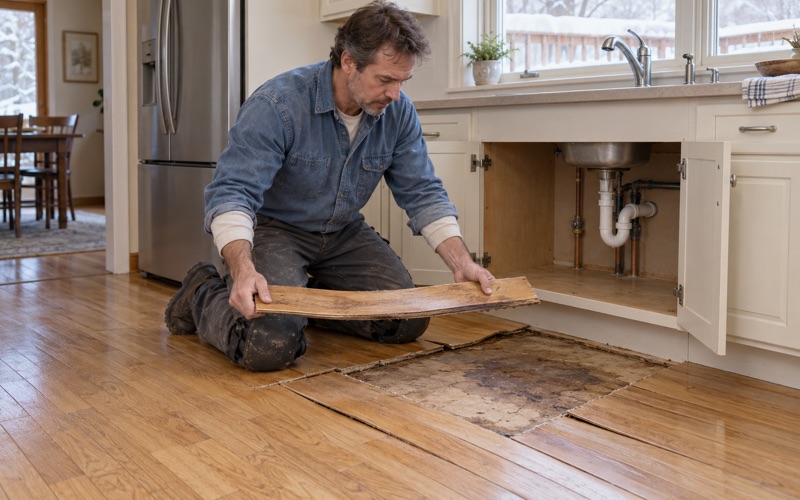
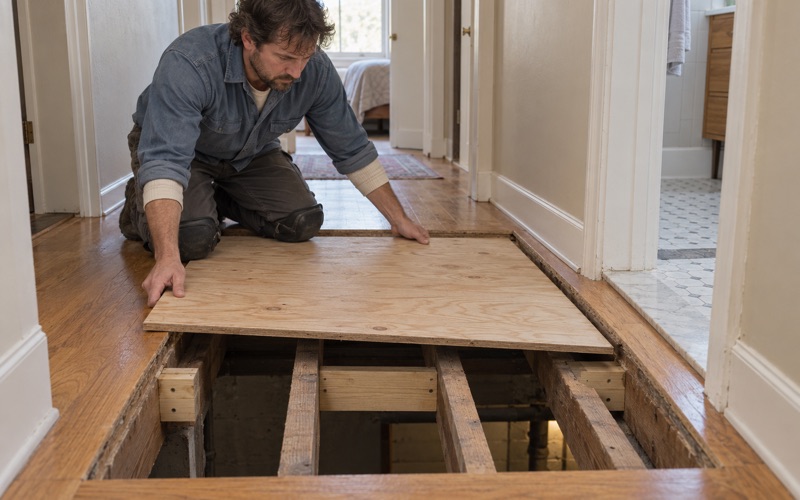
That gives sellers room to choose. A recoat may be enough to freshen a sound floor, while a house with water stains near a door or soft spots in the subfloor may need more. Subfloor and structural repairs appear as their own line on our quote, separate from the finish work, so nothing is hidden inside the per-foot rate.
Permits and Finish Work
Minnesota Rules 1300.0120 exempts finish work from a building permit, and refinishing an existing wood floor falls in that category. The Minnesota State Building Code is administered here by the City of Mendota Heights, but a sand and refinish or a board-for-board repair does not need a permit. Structural repairs to joists are a different conversation, and we raise it if one comes up.
Working Around the People Who Live in the House
Scheduling Room by Room
Many floor jobs here happen with someone still living in the house, and for an older owner leaving for a week is not always practical. We can sequence the work so a bedroom, a bathroom path and the kitchen stay usable while other rooms are sanded and coated. The plan is written out at the quote so the household knows which doors close on which days.
Sequencing has a cost in time, since each zone needs its own sanding, sealer and topcoats, and transitions between zones need careful blending at a threshold or T-molding. We explain that tradeoff up front. For some households a few nights with family is simpler, and for others staying home is the whole point.
Dust, Fumes and Older Houses
Sanding throws fine dust, which matters more when someone in the house has asthma or other breathing trouble. Our sanders run with dust containment and HEPA vacuums, and we seal off the work area from the rooms still in use. We describe that setup by the equipment involved rather than calling it dustless, because no sanding job is entirely free of dust.
Houses built before 1978 may carry lead in old paint on baseboards, trim and door casings near the floor. We sand those houses under the federal EPA Renovation, Repair and Painting rule, which sets work practices for disturbing painted surfaces. For finishes, we can use waterborne polyurethane, which is lower in odor than oil-modified polyurethane and easier on an occupied house.
Cure Time, Stairs and Getting Back to Normal
Dry time and cure time are different things, and the gap between them matters most in a house where someone moves carefully. A waterborne finish may take light foot traffic within a day, but rugs, heavy furniture and pets wait longer while it cures. Those dates are on paper before we start, so nobody guesses about when a rug can safely go back.
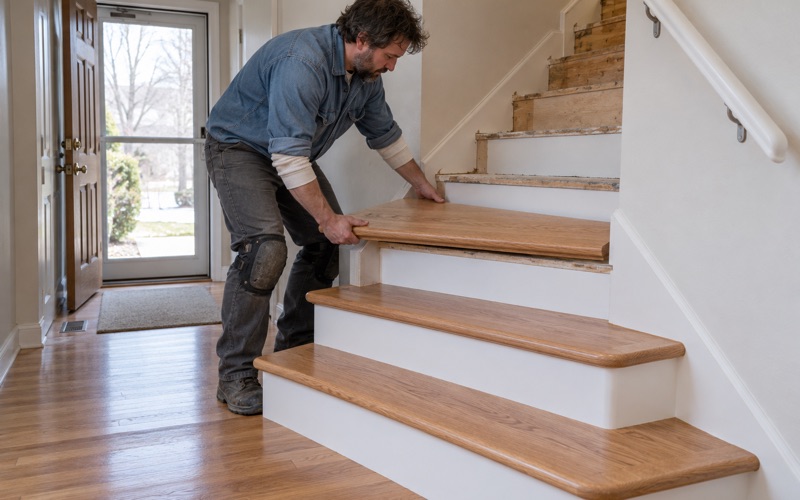
Stairs deserve their own attention for an owner who plans to stay. We quote them per stair tread and riser rather than folding them into a square-foot price, and we check each nosing for wear and looseness. A sheen choice matters here too, since a satin or matte finish shows less glare on steps than a high gloss.
- 20+ Years on Wood Floors
- Per-Square-Foot Written Quotes
- Stairs Priced Per Tread