Minnetonka Wood Flooring has handled wood-flooring in Edina for more than 20 years, and a good share of that work starts with a question most flooring companies skip: who owns the floor? In a detached house the answer is simple. In a cooperative or a large condominium building, the answer decides who approves the job, who pays for it and what the crew may touch.
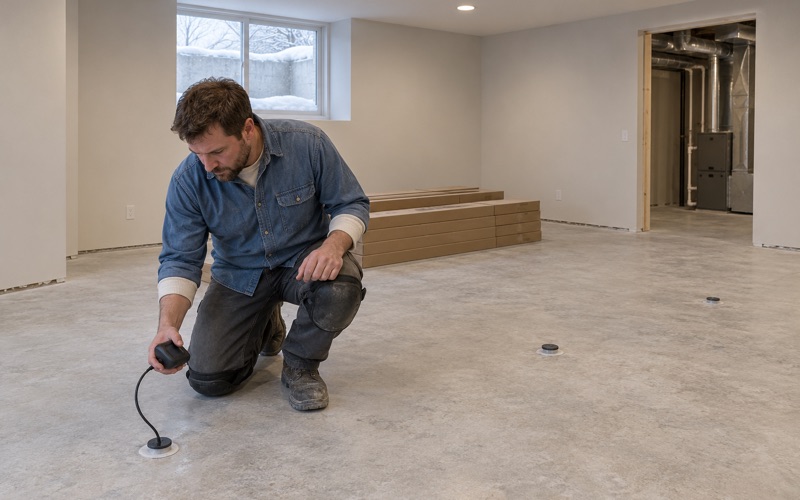
We sort that out on the first visit, before anyone talks about stain colors. We read the indoor relative humidity and write it on the quote, we take moisture readings on the subfloor or slab, and we give a written price per square foot with a screen and recoat and a full sand and refinish priced next to each other.
For anyone living in a shared building, we also read the association or cooperative documents and match the underlayment to the building before a date goes on the calendar. That order of work keeps a refinish or a new install from turning into a dispute with the board halfway through.
Owning a Share, Not a Floor: Edina’s Senior Cooperatives
Edina has a housing type that changes the floor conversation more than any species or finish choice does. In a senior housing cooperative, a resident does not buy an apartment. They buy a share in a corporation that owns the whole building, and that corporation makes the decisions a homeowner would normally make alone.
How a cooperative share works
As a senior cooperative representative put it to MPR News in 2024: “The Cooperative owns the building, the land, all of the appliances, all of the floor coverings, all of the window treatments.” The member’s share is generally around 50 percent of the total value of the unit, and the member also pays the cooperative a monthly fee.
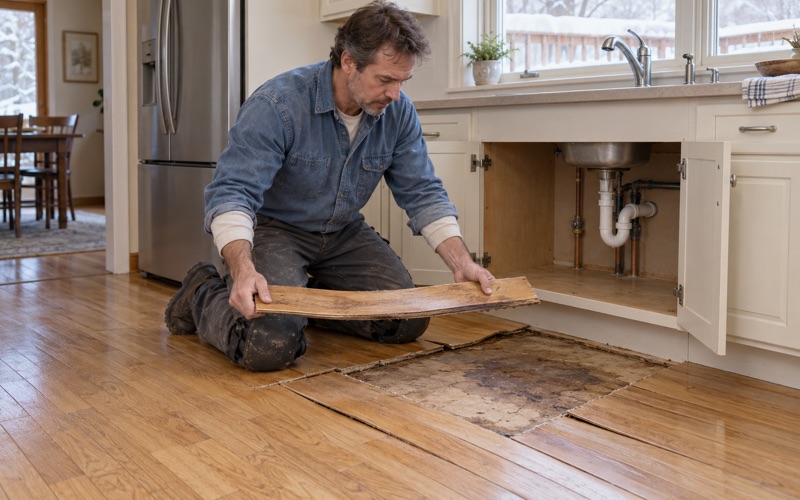
That sentence about floor coverings is the one that matters for us. The hardwood, the carpet and the vinyl in a co-op apartment belong to the cooperative, not to the person who lives there. Any refinish, board replacement or new floor is a request to the cooperative, and the cooperative’s own rules decide what happens next.
7500 York and Minnesota’s senior co-ops
Edina is home to 7500 York, which the nonprofit Ebenezer describes as the country’s first age-restricted cooperative housing community. The building has more than 330 units, with apartments from 775 to 1,445 square feet across several floor plans. Its success put Ebenezer on the road to becoming the management company for 61 upper-Midwest co-ops.
Minnesota holds 60 percent of the senior co-ops in the country, so the model is not a curiosity here. At 7500 York, share prices for the smallest units start at $46,212 with a monthly fee of $1,436, and the largest run $100,373 with a fee of $2,974. Residents paying those fees expect the building’s standards to hold on every floor.
What that changes about a flooring job
When a co-op member calls us, our first step is to find out what the cooperative allows and who on staff or on the board handles floor requests. We do not quote a replacement as though the member can simply order it. The quote goes to whoever the cooperative says approves the work, with the scope written out so the board can read it.
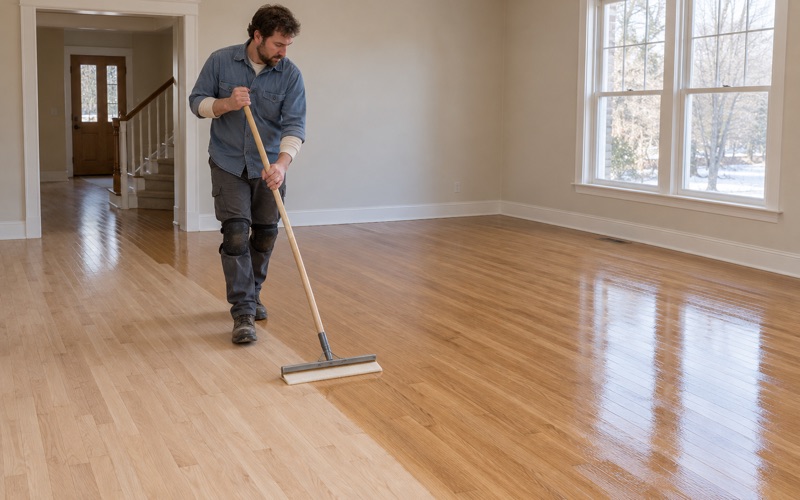
A refinish inside an occupied senior building also has practical limits. We spell out the finish chemistry, the dry time, the cure time and the day furniture and rugs can go back, so the resident and the building staff can plan around a room being out of use. Dust containment is described by the equipment we bring, not by a promise.
Looking for wood-flooring closer to Eden Prairie? See Wood-Flooring Services in Eden Prairie.
Condominium Owners in Edina’s Large Buildings
Cooperatives are one part of a bigger picture. Edina has a large number of owners who live above or below a neighbor, and a floor job in that setting carries obligations a detached house never has.
How many owners share a building
Census survey figures for Edina count 1,907 owner-occupied households in buildings of fifty or more units, which is 11.5 percent of all owners. Widen the view to buildings of five or more units and the figure reaches 3,436 owner households, or 20.7 percent of owners. Another 4,050 renter households live in buildings of fifty or more.
Those numbers include condominium owners, who own their units outright, and co-op members, who own shares. The difference matters, but both groups live under an association or a board with rules about floors, noise and contractor access. We ask which kind of ownership applies before we talk about the work itself.
Sound and the underlayment underneath
In a tall building, the neighbor below hears every footstep a hard floor transmits. Many associations write their own requirements for acoustic underlayment, often stated as an impact insulation class or sound transmission class figure, and some require approval of the product before installation.
Those requirements come from the association’s documents, not from the residential code, so we read the declaration and rules rather than guess. When a building names a product or a rating, we match it. When it is silent, we tell the owner that plainly and suggest asking management before a floating floor or a glue-down engineered floor goes over a concrete deck.
Concrete decks and moisture
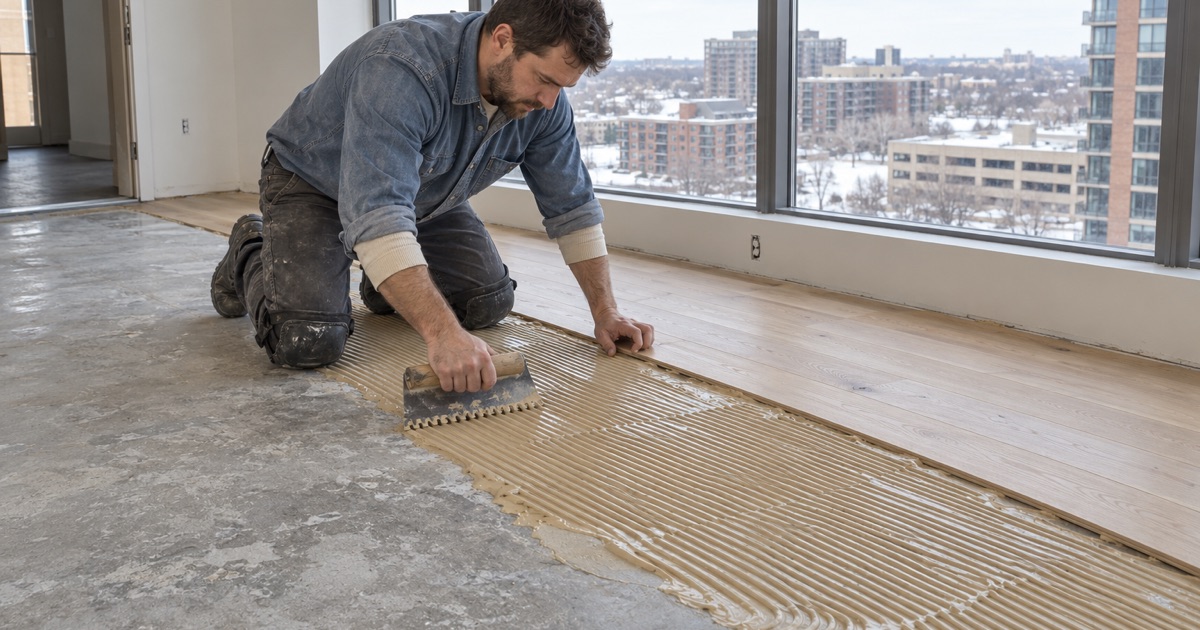
Most large buildings have concrete floor slabs rather than a wood subfloor, which changes how wood goes down. We test the slab, using an in-situ relative humidity test under ASTM F2170 where the job calls for it, and record the reading before a board is laid.
Engineered flooring is the usual choice over concrete. Before we promise a future sand-and-refinish on any engineered floor, we measure the wear layer, because a thin top layer may allow one screen and recoat and nothing more. Owners deserve to know that limit before they buy.
Who Signs Off Before Floor Work in a Shared Building
People often assume a building permit is the gate for floor work. In Minnesota it usually is not, and that can mislead owners into thinking nobody needs to approve anything.
What the permit exemption covers
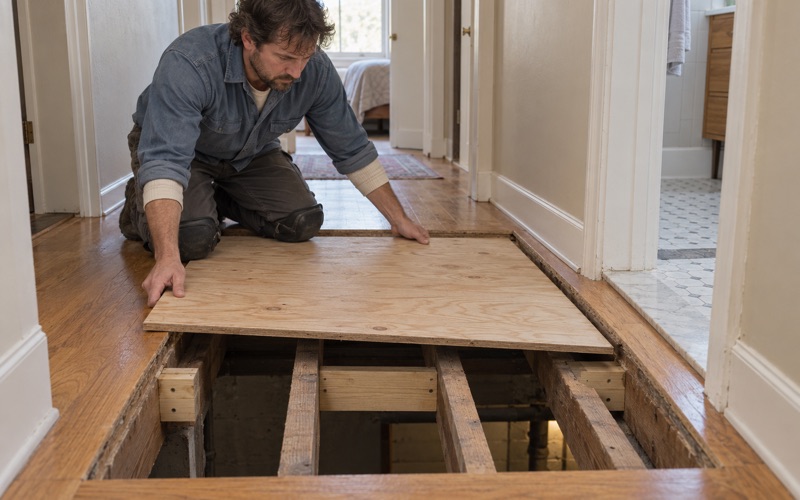
Minnesota Rules 1300.0120 exempts finish work, including carpeting, tiling and similar finish work, from a building permit. A typical hardwood refinish or a floor covering replacement falls in that category. Subfloor or structural repair is a different matter, and we price it as its own line.
The same rule states that the exemption does not authorize work that violates the code or any other ordinance. It also says nothing about private rules. A floor job that needs no permit from the City of Edina can still need written approval from a cooperative board or a condominium association before it starts.
Approval at the building level
In practice, the sign-off that matters in a shared building comes from management or the board. Many buildings want a certificate of insurance, set work hours, elevator reservations and protection for common hallways. Some limit which rooms may have hard flooring at all.
We gather those requirements before scheduling. For a co-op, we confirm in writing that the cooperative has approved the scope, since the floor coverings belong to it. For a condominium, we confirm the association has signed off on the underlayment and the floor type.
Planning around neighbors
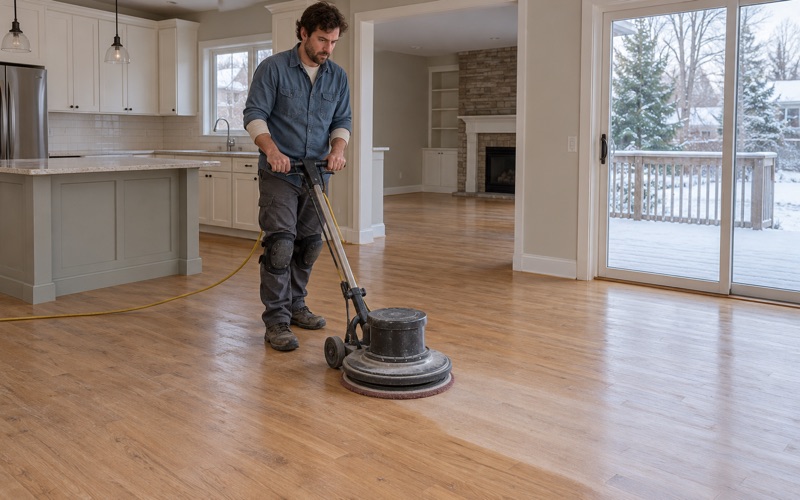
A drum sander, an edger and a buffer are loud, and finish odor travels through shared air. We schedule sanding inside the hours the building allows and run dust containment with a HEPA vacuum attached to the sanding equipment. Hallways and the elevator route are protected before the first bucket of finish comes through.
Waterborne polyurethane is often the better choice in an occupied building because of its lower odor and shorter recoat window. Oil-modified polyurethane or a hardwax oil can still be used where a building allows it, and we write down which finish is going on and when the room is usable.
The Detached Houses That Still Hold Most Owners
For all of Edina’s shared buildings, most owners still live in a house of their own. Of 16,586 owner-occupied households, 12,225 are in one-unit detached houses, which is 73.7 percent of owners. Those jobs bring a different set of concerns.
Many of those houses have finished lower levels, and a walkout is graded by the three-inch soil rule rather than by how it looks from the backyard. Where soil sits more than three inches above the floor along a wall, we quote that floor as below grade and choose the flooring and vapor retarder to match.
Older houses and older finishes
Edina’s housing stock is mostly older: 68.1 percent of housing units were built before 1980, and the 1970s are the largest single build decade. In pre-1978 housing, old finish can contain lead, so we sand under the EPA Renovation, Repair and Painting rule and describe the containment by the equipment we use.
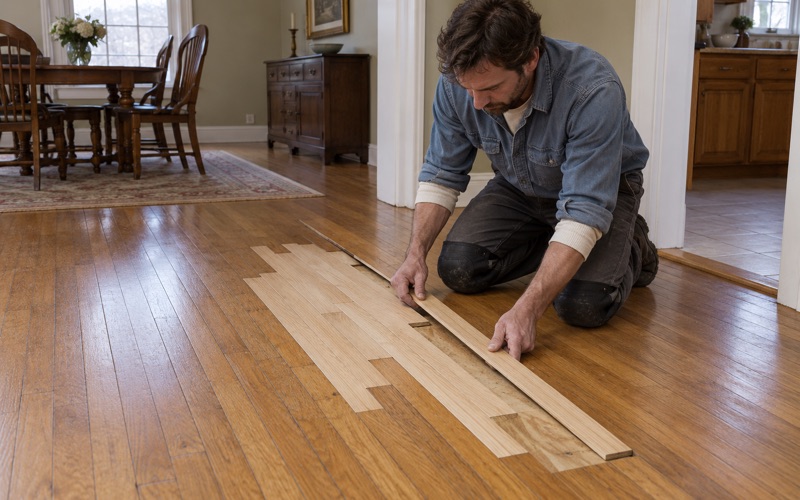
Many older houses hold solid red oak or white oak that may have been sanded before. We check how much board remains above the tongue and groove before recommending a full sand, and we name the grit sequence so a homeowner knows how much wood is coming off.
Furnace season and seasonal gapping
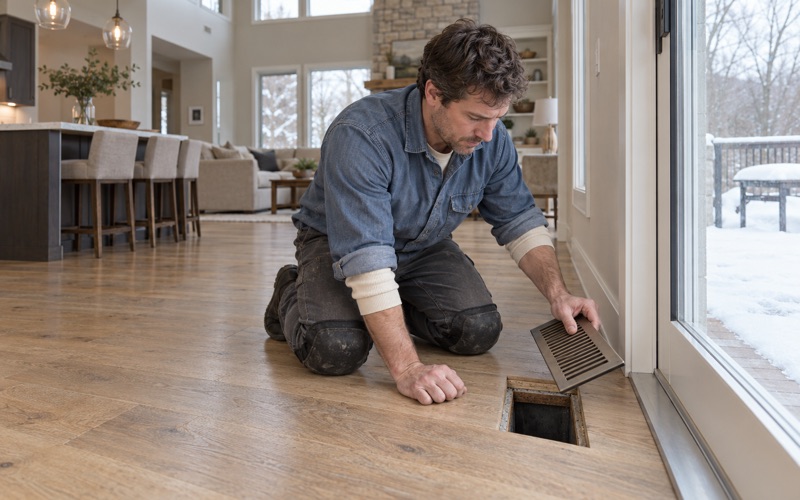
A Minnesota house in furnace season often sits below the thirty to fifty percent relative humidity range that wood flooring is made for. That is when seasonal gapping shows up between boards, and it is why we put the humidity reading on the quote.
When gaps appear in winter, the fix is often humidity control rather than new boards. A whole-house humidifier, set and checked with a hygrometer, can keep the floor near its equilibrium moisture content, and we tell owners when that is the honest answer.
Choosing between a recoat and a full sand
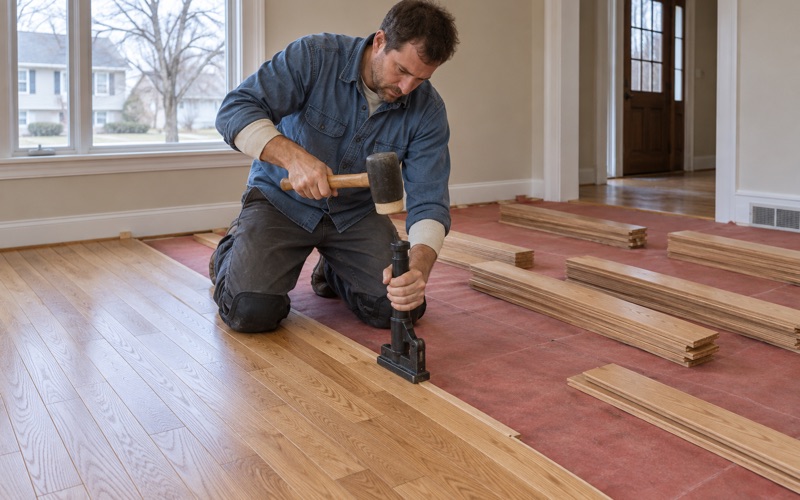
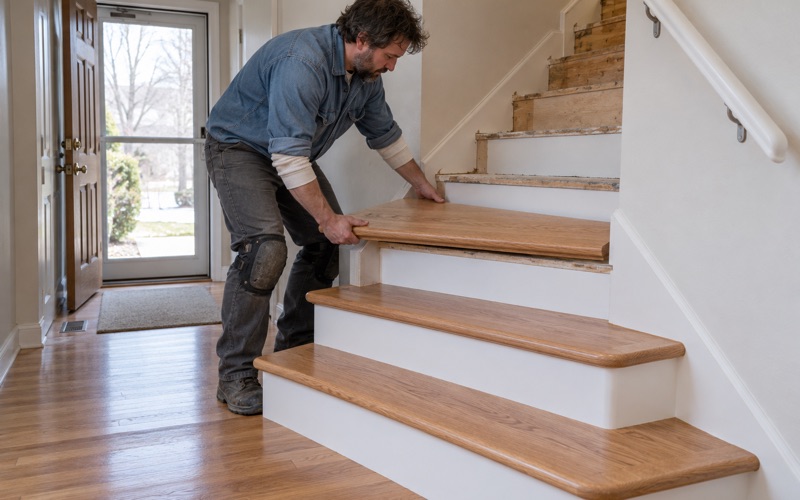
A floor with worn finish but sound wood may only need a buff and coat. A floor with gray traffic lanes, deep scratches or old water staining usually needs a full sand and refinish. Stairs get their own price per tread and riser.
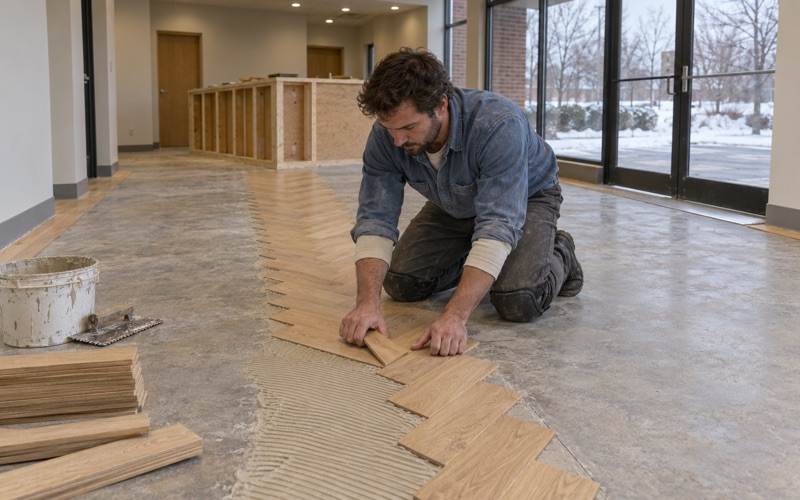
Wood species also shapes that choice. Red oak hides wear and takes stain evenly, while hard maple is prone to stain blotching and usually looks best natural. Herringbone and other pattern floors take more care at the edger, and we note any pattern work on the quote.
Both options appear on the same written quote, priced side by side, so owners in an Edina house, condominium or cooperative can choose with the cost in front of them.
- 20+ Years on Wood Floors
- Per-Square-Foot Written Quotes
- Stairs Priced Per Tread