Minnetonka Wood Flooring has handled commercial wood flooring for more than 20 years, refinishing, recoating, repairing and installing wood floors in offices, shops, restaurants, studios and building common areas in and around Minnetonka, MN. Commercial floors carry more traffic than most homes, and the schedule has to fit the business rather than the other way around.
We start with a walk-through and a written quote that lists the square footage, the work recommended for each area, the finish system, and the dry and cure times. Where a recoat and a full sand are both possible, we price them side by side.
The quote also shows how the work can be phased, which zones close and when, and the time each area can reopen, so you can plan staffing, deliveries and customers around it.
Commercial Wood Floor Services
Refinishing High-Traffic Floors
Commercial floors wear fastest at entrances, behind counters, along aisles and between workstations. When traffic lanes have worn through the finish to gray wood, a full sand and refinish removes the damage and restores a uniform surface. We sand with a drum sander and edger through a grit sequence suited to the floor, then apply a commercial-grade finish system.
Screen and Recoat Maintenance
A screen and recoat is the best tool for keeping a commercial floor from reaching that point. It abrades the existing finish and adds a fresh protective coat without removing wood, often in a single overnight or weekend window. Done on a regular schedule, it can postpone full sanding for years.
Repairs and Board Replacement
Dropped equipment, rolling loads, leaks and furniture can damage individual boards. We cut out damaged boards and lace in matching replacements, then finish and blend the repaired area. Small repairs can often be completed with only a small zone closed.
When the damage came from a leak, we photograph and moisture-map the area before drying or tear-out begins. That record supports an insurance claim and shows how far the water spread under the floor, which in a commercial space can reach well past the visible stain.
New Installation
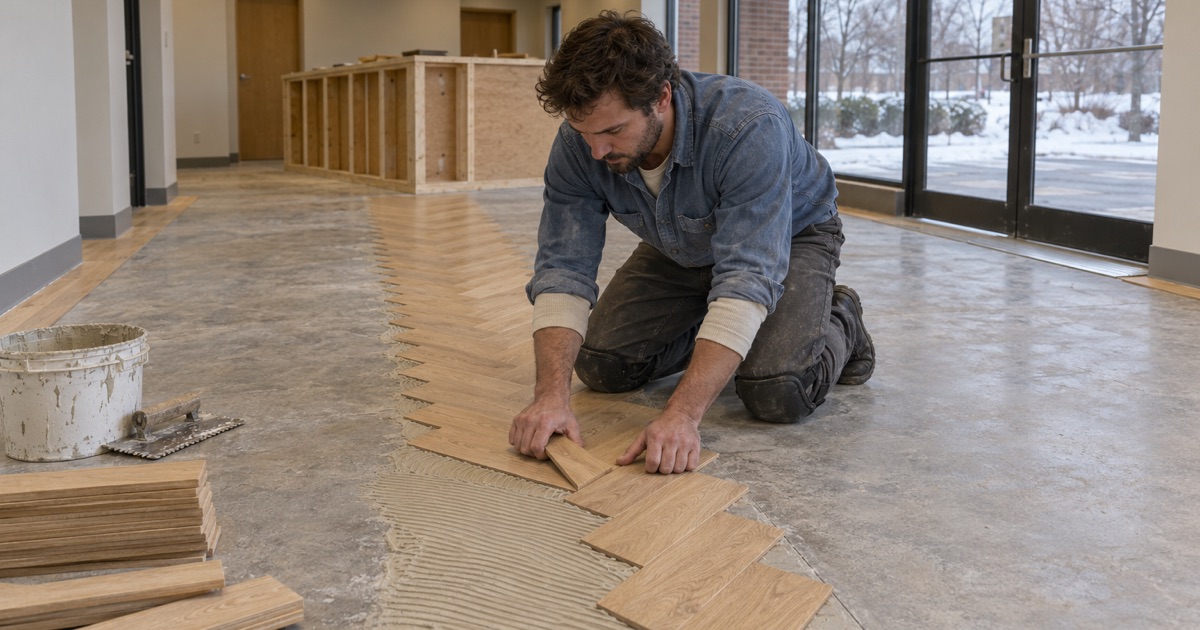
For new spaces and renovations, we install solid and engineered hardwood suited to the space and the subfloor. Engineered flooring is common over concrete in commercial buildings, glued down or floated over an underlayment with a vapor retarder. We test concrete moisture before installation and record the results.
Planning Around Your Business
Phasing the Work
Larger spaces can be divided into zones so part of the business stays open while another section is sanded or finished. We plan the sequence around access, entrances and the spaces you need most, and seal off working areas with dust containment.
Each phase has its own start and reopening time on the written schedule. That lets you post notices, move inventory or reroute customers ahead of time instead of reacting to closed areas on the day.
After-Hours and Weekend Scheduling
Recoats and smaller repairs can often be done after closing or over a weekend. Full refinishing takes longer because each coat needs to dry before the next, but the work can be arranged to minimize lost business days.
Dry Time, Cure Time and Reopening
A finish may be dry enough to walk on within hours, but full cure takes longer. Heavy furniture, rolling carts and rugs should wait until the finish has cured. We write the light-traffic time, the furniture time and the full-cure time on the quote so reopening plans are realistic.
Finish Systems for Commercial Use
Waterborne Polyurethane
Commercial waterborne polyurethane systems dry quickly, stay clear and have lower odor than oil-modified finishes, which helps when a space needs to reopen quickly or neighbors share the building. Their durability makes them a common choice for retail, office and hospitality floors.
Oil-Modified Polyurethane
Oil-modified finishes give wood a warm, amber tone and a durable surface, but they take longer to dry between coats and have a stronger odor. They suit spaces where the schedule allows the longer drying times. Ventilation and odor need planning in shared buildings, so we discuss neighboring tenants before choosing this system.
Hardwax Oil
Hardwax oil penetrates the wood rather than forming a thick film. Worn areas can be spot-repaired without sanding the whole floor, which can work well in businesses with concentrated wear paths. It does need more regular maintenance than a film finish.
Sheen and Slip Resistance
Lower sheens hide scratches and scuffs better in busy commercial spaces, and they generally feel less slick to customers. We help choose a sheen that balances appearance, maintenance and the way the space is used.
Multifamily Buildings and Common Areas
Association Rules and Approvals
Condominium and townhome associations often set rules for flooring work in units and common areas, including working hours, required underlayment and approval steps. We read the association documents and building rules before the job is scheduled.
Sound Between Units
Hardwood over occupied space can carry footstep noise to the units below. Minnesota applies IRC Appendix K to townhouses and two-family dwellings built under the Residential Code, setting sound transmission class 45 and impact insulation class 45. In larger buildings, the association’s own requirements usually govern, and we match the acoustic underlayment to them.
Rental Turnovers
For rental properties, floors are often refinished or recoated between tenants. A recoat can usually be done quickly, while a full sand needs more time for sanding and cure. We plan these turnovers around move-out and move-in dates.
We give landlords a written scope for each unit that separates finish work from repairs, such as replaced boards or subfloor fixes. That makes it easier to see what normal wear costs to restore compared with damage beyond it.
Keeping a Commercial Wood Floor in Good Shape
Entry Matting and Cleaning
Most wear on a commercial floor comes from grit tracked in from outside, especially during Minnesota winters when sand and de-icing material come in on shoes. Good entry matting and regular dust mopping reduce abrasion, and cleaners recommended by the finish manufacturer protect the coating.
Humidity in Commercial Buildings
Commercial buildings can become very dry in winter. Keeping relative humidity near the flooring manufacturer’s recommended range, often thirty to fifty percent, limits seasonal gapping and checking, and we note the reading taken on our first visit.
- 20+ Years on Wood Floors
- Per-Square-Foot Written Quotes
- Stairs Priced Per Tread